
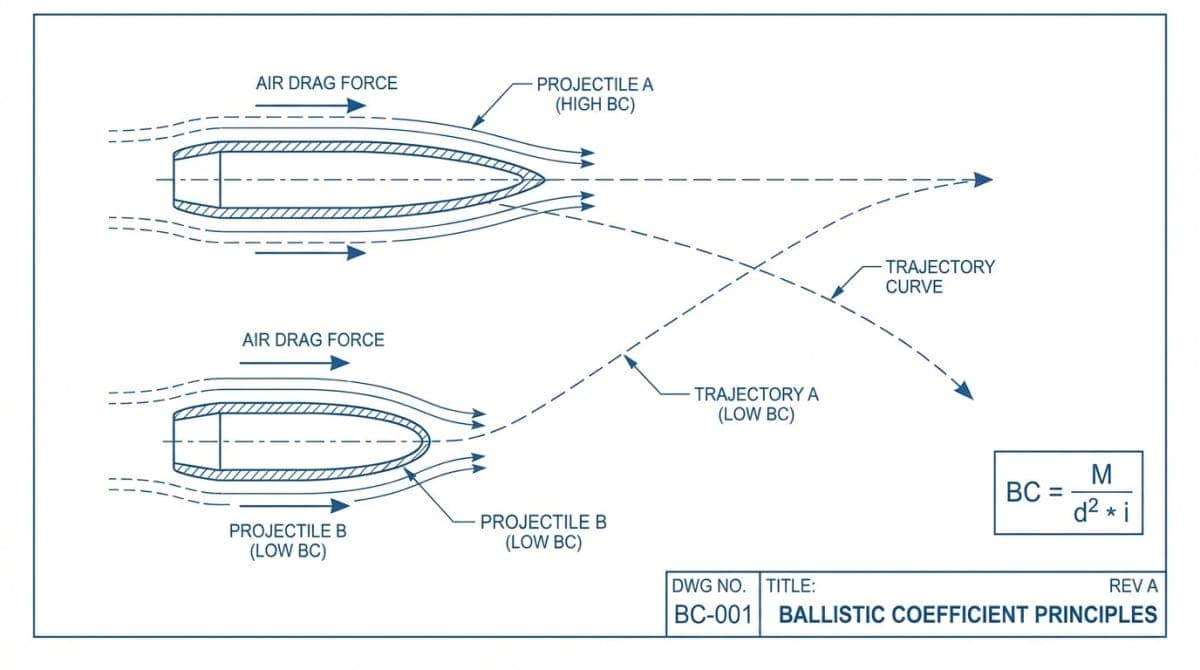
Ballistic Coefficient
The ballistic coefficient (BC) is a numerical value that measures how well a bullet overcomes air resistance during flight. Think of it as an aerodynamic efficiency rating: higher BC bullets maintain velocity better and drift less in wind, making them superior for long range shooting.
Understanding BC Values
Ballistic coefficient is calculated by comparing your bullet to a standard projectile. Two models dominate the industry:
- G1 BC: Based on a flat-base projectile (typically 0.400-0.600 for .223/5.56)
- G7 BC: Based on a boat tail design (typically 0.200-0.300 for .223/5.56)
For example, Berger Bullets’ 77gr OTM has a G1 BC of 0.376 and G7 BC of 0.193. The same bullet, two different numbers, because they use different reference standards.
Why BC Matters for Your Build
When configuring your rifle on the AR15 Outfitters builder, BC directly impacts three key decisions:
Barrel twist rate: Higher BC bullets are typically longer and heavier, requiring faster twist rates. A 77gr Berger needs 1:7 or 1:8 twist, while lighter, lower BC bullets work in 1:9.
Barrel length: Longer barrels generate higher muzzle velocities, which multiply the benefits of high BC projectiles. A 20″ barrel launching high BC ammunition extends effective range significantly compared to a 10.5″ setup.
Optic selection: High BC loads shoot flatter trajectories. At 600 yards, a 77gr SMK (BC 0.372) drops about 20% less than 55gr FMJ (BC 0.243), potentially requiring different scope turret ranges.
Practical Application
For precision work beyond 400 yards, prioritize bullets with G7 BCs above 0.180. Popular choices include Hornady’s 75gr BTHP Match or Sierra’s 77gr MatchKing. At short ranges under 200 yards, BC differences become negligible; prioritize cost and availability instead.
Disclaimer: AR15 Outfitters does not sell firearms. This site is an information and affiliate resource only. All purchases are completed through licensed retailers. Always comply with all federal, state, and local laws when building or purchasing firearms and firearm components.