
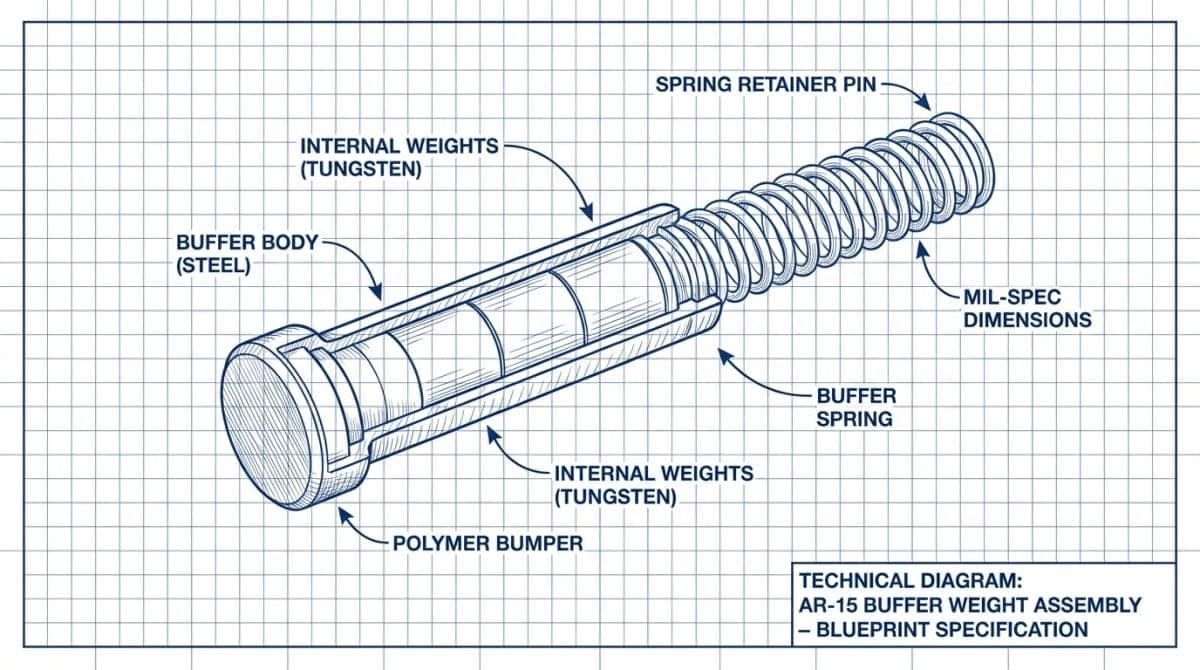
Buffer Weight
The buffer weight is a critical component of your AR-15’s buffer system that directly impacts cycling reliability, recoil management, and overall shooting performance. Located inside the buffer tube, this cylindrical mass works with your buffer spring to control bolt carrier group velocity during the firing cycle.
Standard Buffer Weight Classifications
AR-15 buffers come in four primary weight categories, each designed for specific applications:
- Carbine Buffer: 3.0 oz (standard for most carbine builds)
- H Buffer (Heavy): 3.8 oz (adds one tungsten weight)
- H2 Buffer: 4.6-4.7 oz (contains two tungsten weights)
- H3 Buffer: 5.4-5.6 oz (uses three tungsten weights)
Rifle-length systems typically use a longer, heavier 5.0 oz buffer designed specifically for rifle tubes.
Why Buffer Weight Matters
Selecting the correct buffer weight ensures proper cycling with your specific gas system, barrel length, and ammunition. A properly matched buffer weight provides:
- Reduced felt recoil and muzzle rise
- Consistent brass ejection patterns (typically 3-4 o’clock)
- Reliable feeding and extraction
- Decreased bolt bounce and carrier speed
Practical Selection Guide
For carbine gas systems with 16-inch barrels, start with a standard carbine buffer or H buffer. Shorter barrels (10.5-14.5 inches) generally benefit from heavier H2 or H3 buffers to slow down the accelerated bolt carrier velocity. When using suppressors, consider increasing buffer weight by one step to compensate for increased backpressure.
Use the AR15 Outfitters builder to ensure buffer weight compatibility with your selected components, particularly your buffer tube length and stock configuration.
Disclaimer: AR15 Outfitters does not sell firearms. This site is an information and affiliate resource only. All purchases are completed through licensed retailers. Always comply with all federal, state, and local laws when building or purchasing firearms and firearm components.