
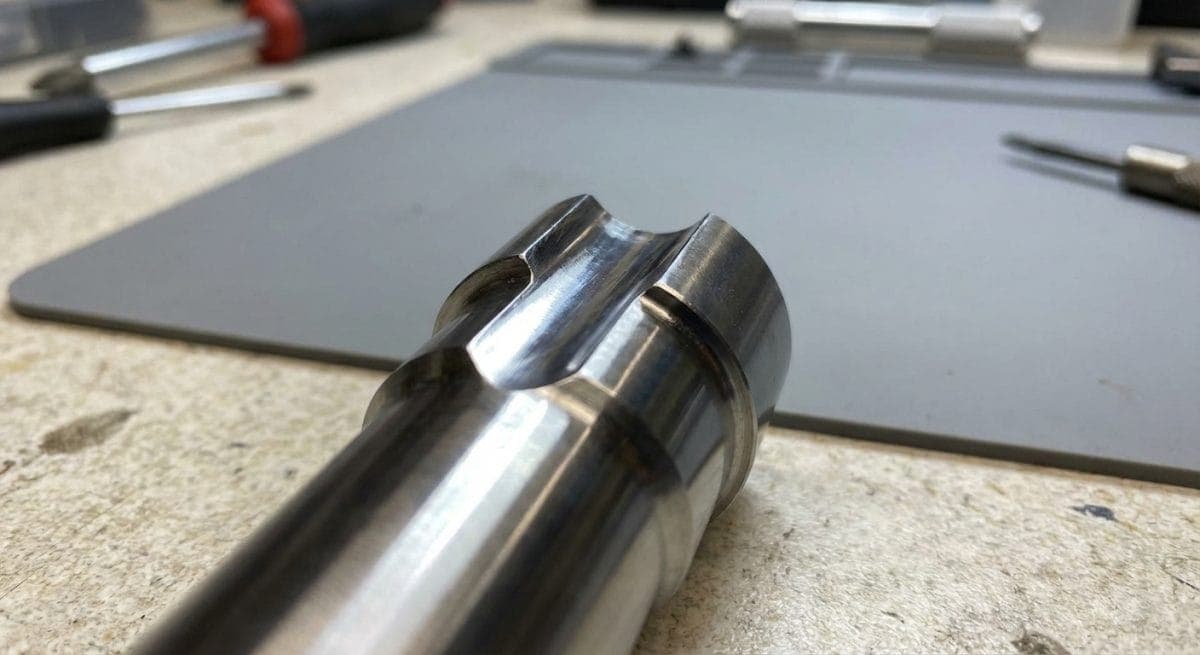
Feed Ramp Polishing
Feed ramp polishing is the process of smoothing and refining the angled surfaces that guide cartridges from the magazine into the chamber of your AR-15. These critical surfaces exist where the upper receiver meets the barrel extension, creating a pathway for each round to travel during the feeding cycle.
In an AR-15, you’ll find two sets of feed ramps: those cut into the aluminum upper receiver and those machined into the steel barrel extension. M4 feed ramps feature extended cuts that provide additional clearance for reliable feeding, particularly with heavier bullets or when firing at extreme angles. The transition between these surfaces must be smooth to prevent bullet tips from catching or hanging up during the feed cycle.
Why Feed Ramp Polishing Matters
Factory feed ramps typically have tool marks and rough surfaces that can cause feeding issues. When a round travels from magazine to chamber, the bullet nose slides along these ramps. Any roughness or misalignment can cause:
- Failure to feed malfunctions
- Damaged bullet tips affecting accuracy
- Increased wear on brass cases
- Reliability issues with certain ammunition types
Practical Polishing Tips
Most builders use 400 to 600 grit sandpaper followed by polishing compound. The goal is a mirror-like finish without removing excess material. Focus on:
- Maintaining the original angle (typically 52 degrees for M4 feed ramps)
- Creating smooth transitions between upper receiver and barrel extension ramps
- Removing only enough material to eliminate tool marks
When selecting components in the AR15 Outfitters builder, pay attention to whether your chosen barrel features M4 feed ramps to ensure compatibility with your upper receiver.
Disclaimer: AR15 Outfitters does not sell firearms. This site is an information and affiliate resource only. All purchases are completed through licensed retailers. Always comply with all federal, state, and local laws when building or purchasing firearms and firearm components.