
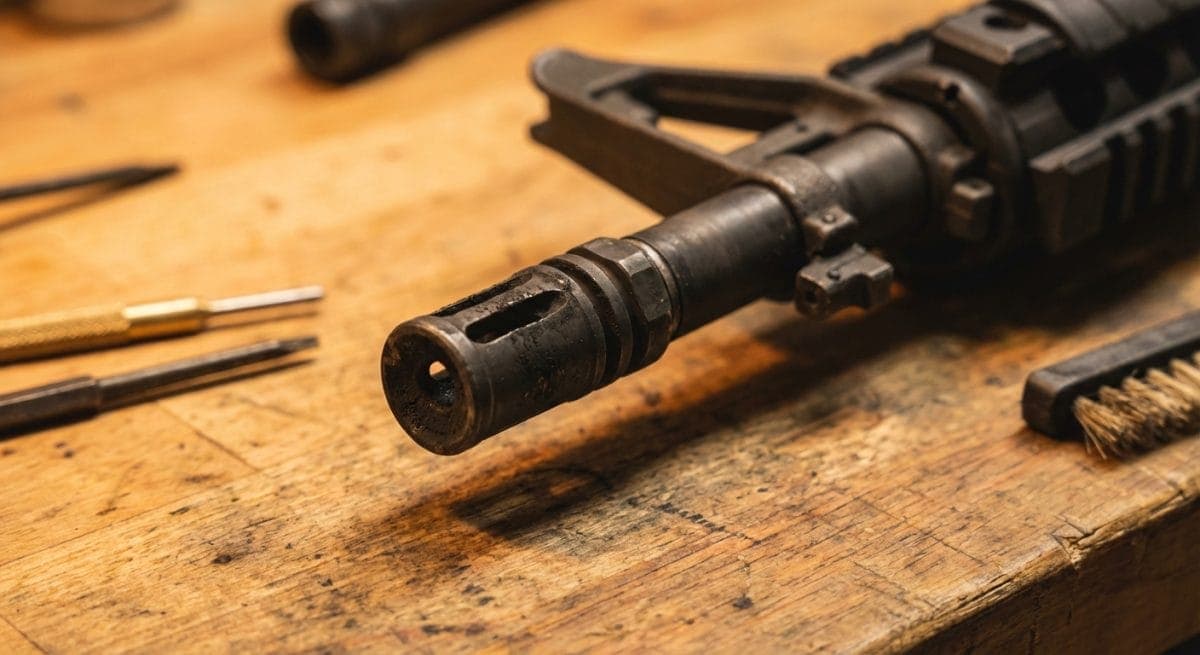
Muzzle Blast
Muzzle blast refers to the explosive release of high-pressure gas that exits the barrel immediately after a bullet leaves the muzzle. When you shoot an AR-15, expanding gases from burning powder propel the bullet forward, and these gases exit at supersonic speeds (typically 2,000+ feet per second), creating a powerful shock wave.
Why Muzzle Blast Matters for AR-15 Builders
The intensity of muzzle blast directly impacts shooter comfort and range etiquette. A standard 16-inch AR-15 barrel produces approximately 165 decibels of noise at the muzzle, while shorter barrels generate even more concussion. This blast can cause:
- Hearing damage without proper protection
- Physical discomfort to the shooter and nearby bystanders
- Difficulty spotting impacts due to disturbed air and debris
- Increased shooter fatigue during extended range sessions
Managing Blast in Your Build
Your muzzle device selection significantly affects blast characteristics. Standard A2 flash hiders direct blast forward, while muzzle brakes redirect gas to reduce recoil but increase side blast by up to 40%. For builds prioritizing blast reduction, consider:
- Linear compensators: Direct blast away from the shooter without reducing recoil
- Blast shields: Attach over existing brakes to redirect concussion forward
- Suppressors: Reduce blast by 20-35 decibels when properly mounted
When configuring your rifle on the AR15 Outfitters builder, barrel length proves the most important factor. Each inch of barrel typically reduces blast intensity by 3-5%, making 16-inch or longer barrels preferable for comfort. Hunters using short-barreled rifles should particularly consider blast-forwarding devices to protect their hearing during field use where ear protection might compromise situational awareness.
Disclaimer: AR15 Outfitters does not sell firearms. This site is an information and affiliate resource only. All purchases are completed through licensed retailers. Always comply with all federal, state, and local laws when building or purchasing firearms and firearm components.