
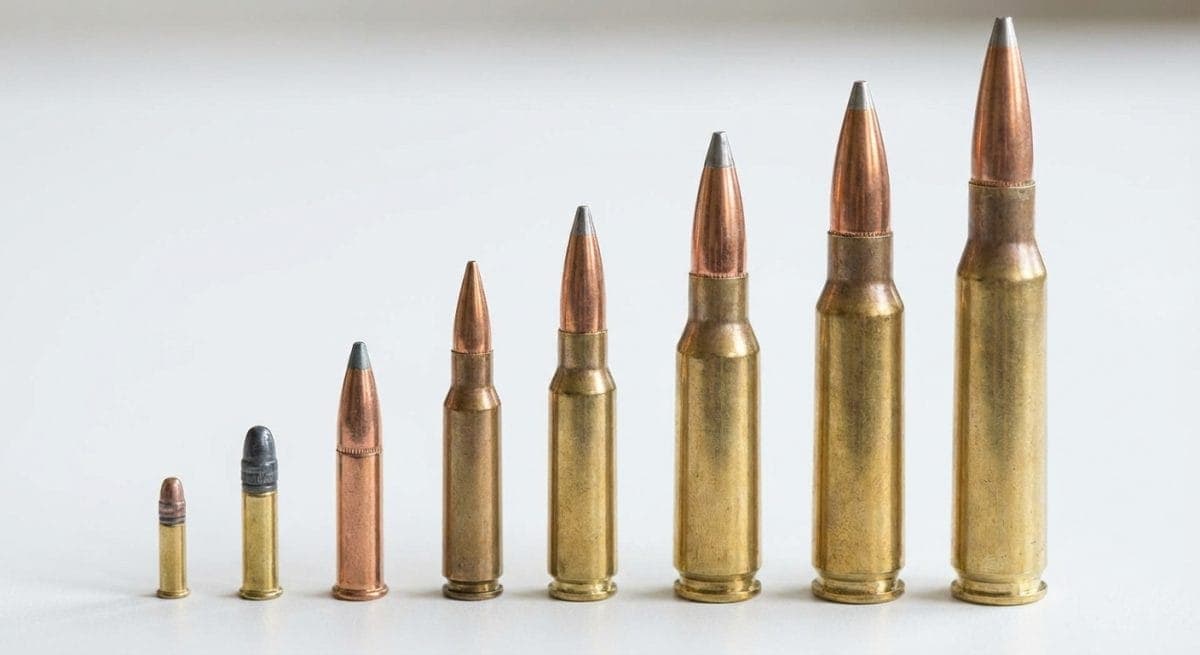
Projectile Grain Weight
Projectile grain weight refers to the mass of a bullet measured in grains, where one grain equals 1/7000th of a pound or approximately 0.0648 grams. Common 5.56 NATO and .223 ammunition features bullet weights ranging from 40 grains for lightweight varmint loads to 77 grains for long-range match ammunition, with 55-grain and 62-grain bullets being the most popular choices for AR-15 rifles.
Why Grain Weight Matters
Bullet weight directly impacts three key performance factors: velocity, trajectory, and stability. Lighter bullets typically achieve higher muzzle velocities (3,200+ fps for 55-grain M193) but lose velocity faster downrange. Heavier bullets start slower (2,750 fps for 77-grain MK262) but retain energy better at distance, making them superior for long-range shooting beyond 300 yards.
Most importantly, projectile grain weight must match your barrel’s twist rate for proper stabilization. A 1:9″ twist barrel stabilizes bullets up to 69 grains effectively, while 77-grain projectiles require a faster twist rate of 1:7″ or 1:8″. Mismatching these specifications results in poor accuracy and potential keyholing.
Building Considerations
When selecting a barrel through the AR15 Outfitters builder, consider your intended ammunition first. For general purpose shooting with 55-grain and 62-grain ammo, a 1:8″ twist barrel offers the best versatility. Builders focused on precision shooting with heavier 69-77 grain match ammunition should select 1:7″ twist barrels.
Barrel length also affects performance: 16″ barrels lose approximately 150-200 fps compared to 20″ barrels, making bullet weight selection even more important for shorter builds. Generally, carbine-length systems benefit from lighter bullets to maximize velocity, while rifle-length gas systems pair well with heavier projectiles for improved ballistics.
Disclaimer: AR15 Outfitters does not sell firearms. This site is an information and affiliate resource only. All purchases are completed through licensed retailers. Always comply with all federal, state, and local laws when building or purchasing firearms and firearm components.