
Staking
Staking
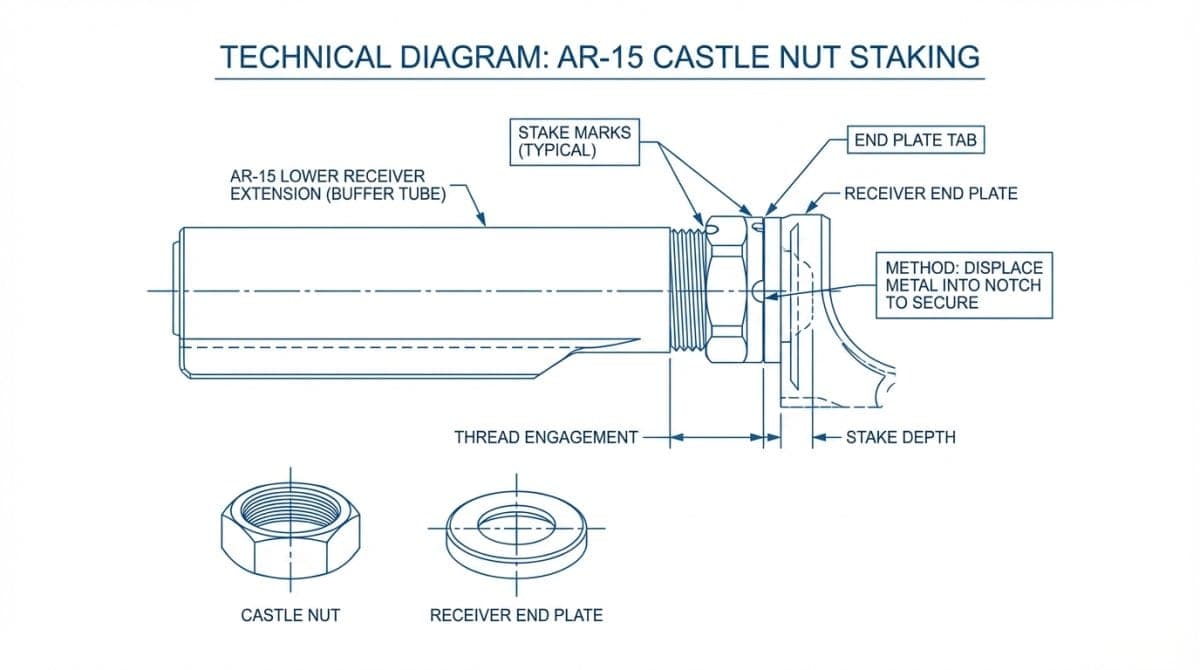
Staking is a mechanical deformation process used to permanently secure critical AR-15 components, specifically the castle nut and gas key. This process involves using a staking tool or center punch to displace metal into adjacent grooves or recesses, creating a mechanical lock that prevents components from working loose under recoil.
Why Staking Matters
Two components on your AR require staking for safe, reliable operation:
- Castle Nut: Secures your buffer tube to the lower receiver. Without proper staking, the castle nut can loosen during firing, potentially causing catastrophic failure.
- Gas Key (also called carrier key): Attaches to your bolt carrier with two key screws. An improperly staked gas key will come loose, causing short-stroking, failure to extract, and gas leakage.
The Staking Process
For the castle nut, after torquing to 40 ft-lbs with an armorer‘s wrench, you’ll stake at two points where the nut meets the endplate notches. For gas keys, the cap screws must be torqued to 35-40 in-lbs before staking the screw heads to prevent backing out.
Practical Builder Tips
When planning your build on the AR15 Outfitters builder, budget for quality staking tools. A proper staking punch (typically $30-50) creates clean, consistent stakes without damaging surrounding components. While some builders suggest Loctite as an alternative, it’s not a substitute for proper staking on these critical components.
Remember: good staking looks like a small divot of displaced metal, not a crater. The goal is deformation, not destruction. In most cases, properly staked components will outlast the rifle itself.
Disclaimer: AR15 Outfitters does not sell firearms. This site is an information and affiliate resource only. All purchases are completed through licensed retailers. Always comply with all federal, state, and local laws when building or purchasing firearms and firearm components.