
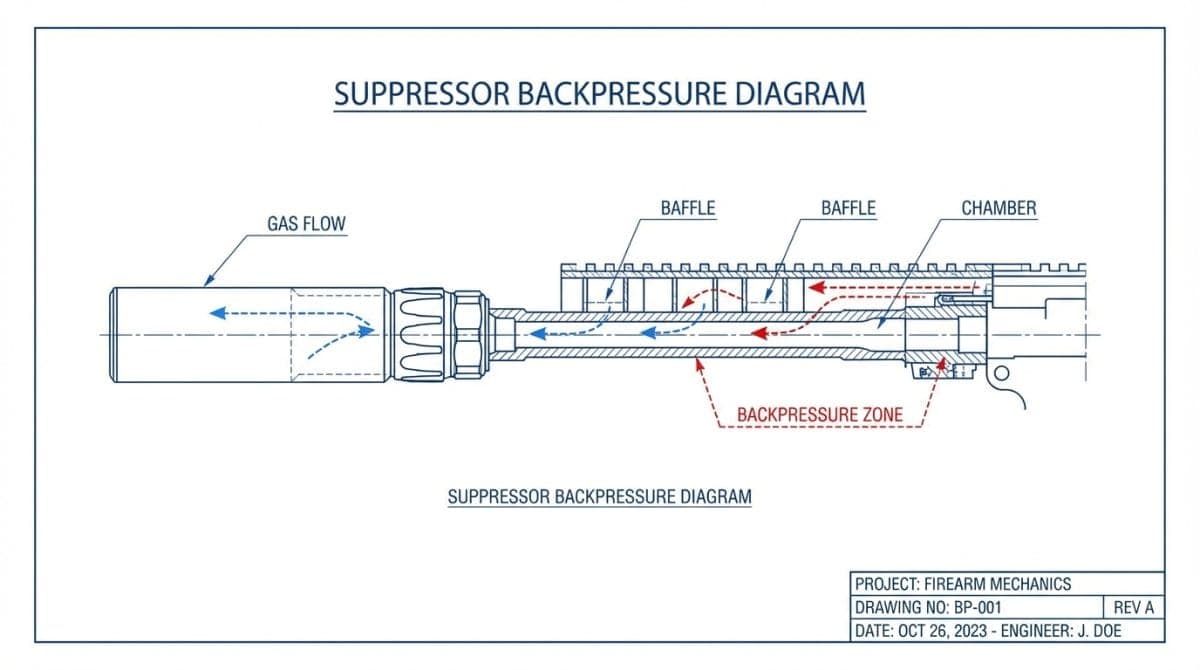
Suppressor Backpressure
Suppressor backpressure refers to the increased gas pressure that flows back through your AR-15’s gas system when using a silencer. When expanding gas hits the baffles inside a suppressor, it creates resistance that forces excess gas backward through the gas tube, into the upper receiver, and ultimately out the ejection port toward the shooter’s face.
Why Suppressor Backpressure Matters
This phenomenon significantly impacts your rifle’s performance and shooting experience. Increased backpressure typically causes:
- Overgassing symptoms: violent bolt speed, brass ejecting at 1-2 o’clock, premature parts wear
- Gas blowback: hot gas and carbon particles venting through the charging handle and ejection port
- Increased recoil: the bolt carrier group cycles harder and faster than designed
- Reliability issues: failure to lock back on empty magazines, feeding problems
Managing Backpressure in Your Build
When configuring your AR-15 on the AR15 Outfitters builder, consider these gas adjustment strategies:
Adjustable gas blocks allow you to restrict how much gas enters the system, compensating for suppressor backpressure. Set your gas block to barely cycle unsuppressed rounds reliably, then open it incrementally when suppressed.
Low back pressure suppressors use advanced baffle designs that vent gas forward rather than back into your gas system. Models like the CAT WB and Huxwrx Flow series typically reduce gas blowback by 40-70% compared to traditional designs.
Enhanced charging handles with gas-busting features redirect excess gas away from your face, improving comfort without addressing the root cause.
The most effective approach combines an adjustable gas block with a quality suppressor designed to minimize backpressure, giving you a properly tuned rifle that runs smoothly both suppressed and unsuppressed.
Disclaimer: AR15 Outfitters does not sell firearms. This site is an information and affiliate resource only. All purchases are completed through licensed retailers. Always comply with all federal, state, and local laws when building or purchasing firearms and firearm components.