
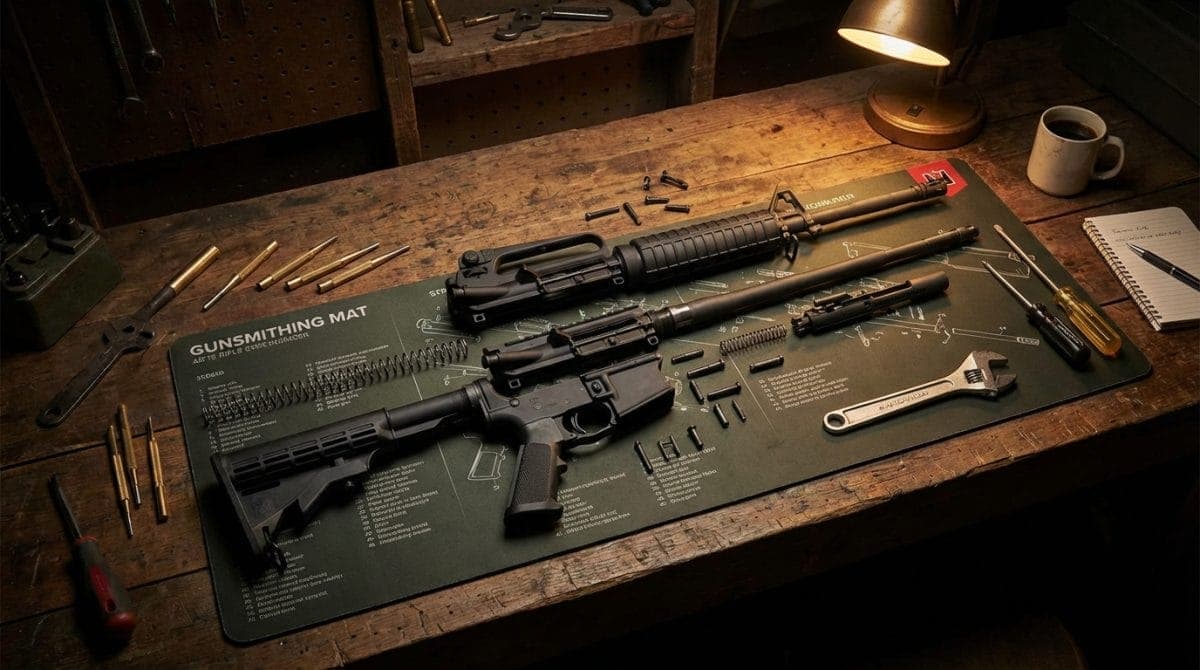
AR-15 Pistol Build Guide: What You Need to Know
By AR-15 Outfitters · April 9, 2026
AR15 Outfitters may earn a commission on purchases made through links in this guide. This does not affect pricing or our recommendations.
Building an AR-15 pistol offers a compact, versatile platform that excels in home defense and recreational shooting. Unlike their rifle counterparts, AR-15 pistols feature barrels under 16 inches and lack traditional stocks, creating a firearm that’s both maneuverable and powerful. This guide walks you through every aspect of your AR-15 pistol build, from selecting compatible parts to final assembly.
Before starting any pistol build, understand that AR-15 pistols fall under specific ATF regulations. These firearms cannot have a stock (only pistol braces are permitted) and must maintain an overall length under 26 inches to avoid NFA classification. Building responsibly means staying informed about current regulations in your jurisdiction.
Complete AR-15 Pistol Parts List
Every successful AR-15 pistol build starts with quality components. Here’s what you’ll need:
Upper Receiver Components
- Stripped Upper Receiver: The foundation of your upper assembly. Choose forged 7075-T6 aluminum for durability. Configure on AR15 Outfitters
- Barrel: 7.5″ to 11.5″ barrels are most common for pistol builds. A 10.5″ barrel in 5.56 NATO provides optimal velocity while maintaining compactness
- Gas Block and Gas Tube: Match your gas system length to your barrel (typically pistol-length for barrels under 10″)
- Muzzle Device: Flash cans or linear compensators work well for short barrels
- Bolt Carrier Group (BCG): Full-auto rated BCGs provide enhanced reliability
- Charging Handle: Standard or ambidextrous options available
- Handguard: Free-float designs in 7″ to 9″ lengths for most pistol builds
- Forward Assist and Dust Cover: Standard mil-spec components
Lower Receiver Components
- Stripped Lower Receiver: Must be transferred as “other” or “pistol” through your FFL
- Lower Parts Kit (LPK): Includes trigger, safety selector, magazine release, and small parts
- Pistol Brace and Buffer Tube: SBA3, SBA4, or similar ATF-compliant braces
- Buffer and Spring: H2 or H3 buffers often work better with short barrels
- Pistol Grip: Any AR-15 compatible grip works
Essential Tools for Your Build
Having the right tools makes assembly safer and prevents damage to expensive parts:
| Tool | Purpose | Torque Specification |
|---|---|---|
| Armorer’s Wrench | Castle nut, barrel nut installation | 40-80 ft-lbs (barrel nut) |
| Torque Wrench | Precise torque application | Various |
| Vise with Receiver Blocks | Secure work holding | N/A |
| Punch Set | Pin installation | Hand tight |
| Allen Key Set | Handguard, grip screws | 15-25 in-lbs typically |
| Pivot Pin Tool | Easier pin installation | N/A |
Step-by-Step AR-15 Pistol Assembly Guide
Lower Receiver Assembly
Step 1: Install the Magazine Release
Insert the magazine release button from the left side of the receiver. From the right side, install the magazine release spring and thread on the magazine release lever. Depress the button fully and rotate the lever 7-8 full turns until it sits flush with the receiver.
Step 2: Install the Trigger Guard
Support the receiver ears with a 1/4″ punch to prevent cracking. Insert the trigger guard and drive in the roll pin from left to right. Many builders tape the receiver here for extra protection.
Step 3: Install the Pivot Pin
Insert the spring and detent into the receiver hole. Compress with a pivot pin tool or 1/4″ clevis pin while sliding in the pivot pin. The detent should snap into the groove when properly aligned.
Step 4: Install the Trigger Group
Drop in the trigger and hammer with their respective pins. Standard triggers require slave pins during installation. The hammer spring legs rest on top of the trigger pin, with the spring loop facing forward. Verify smooth operation before proceeding.
Step 5: Install the Safety Selector
With the hammer cocked, insert the safety from the left side. Install the detent and spring from the pistol grip hole. The safety should click positively between positions.
Step 6: Install the Pistol Grip
Place the safety detent spring in the grip, align the grip, and install the grip screw. Torque to 25-35 in-lbs. The spring should provide resistance to the safety selector.
Step 7: Install the Buffer System
Thread the pistol buffer tube into the receiver 6-7 full turns. Align the tube so the smooth portion faces down. Install the buffer retainer and spring, then slide on your pistol brace. Tighten the castle nut to 40 ft-lbs while ensuring the buffer retainer moves freely.
Upper Receiver Assembly
Step 1: Install the Forward Assist
Insert the forward assist spring and pawl into the receiver. Compress the assembly and insert the roll pin. The pawl should spring back when released.
Step 2: Install the Dust Cover
Insert the dust cover spring with the long leg in the cover. Align in the receiver and insert the rod from the rear. Install the C-clip to secure. The cover should snap closed with spring tension.
Step 3: Barrel Installation
Apply a thin coat of grease to the barrel extension and upper receiver threads. Insert the barrel, ensuring the pin aligns with the notch. Thread on the barrel nut hand tight, then torque to 30 ft-lbs initially. Loosen and retorque to 30 ft-lbs twice more to properly seat the threads. Final torque should be between 40-80 ft-lbs, aligning with the next gas tube hole.
Step 4: Gas System Installation
Slide the gas block onto the barrel, aligning the gas port. For pistol-length systems, the block typically sits 4.0″ from the receiver face. Install the gas tube with the port facing down, securing with the roll pin. Set screw gas blocks should be torqued to 25-30 in-lbs with thread locker.
Step 5: Handguard Installation
Free-float handguards typically attach to the barrel nut. Follow manufacturer specifications for torque, usually 25-35 in-lbs for mounting screws. Ensure the handguard doesn’t contact the gas block.
Step 6: Muzzle Device Installation
Thread on your chosen muzzle device with the included crush washer. Time the device properly if directional, torquing to 15-20 ft-lbs. Shims work better than crush washers for precise timing.
Step 7: BCG and Charging Handle Installation
Insert the charging handle partially, then slide in the BCG with the bolt extended. Push both fully forward until the charging handle latches.
Common AR-15 Pistol Build Mistakes to Avoid
Gas System Misalignment: The number one failure point in pistol builds comes from misaligned gas blocks. Use a 0.070″ gauge pin through the barrel port to verify alignment. Even slight misalignment causes short-stroking and reliability issues.
Over-Torquing the Barrel Nut: Exceeding 80 ft-lbs can stress the upper receiver. Many builders chase perfect handguard alignment by over-torquing. Use shims instead if needed.
Wrong Buffer Weight: Pistol-length gas systems generate higher port pressure. Standard carbine buffers often cause bolt bounce. H2 buffers (4.6-4.7 oz) work well for 10.5″ barrels, while 7.5″ barrels may need H3 buffers (5.4-5.6 oz).
Incorrect Spring Installation: The hammer spring legs must rest on TOP of the trigger pin. Installing them under the pin prevents proper reset and can cause light primer strikes.
Legal Configuration Errors: Installing a vertical foregrip on a pistol under 26″ overall length creates an illegal AOW. Measure from the end of the buffer tube (not the brace) to the muzzle device.
Testing and Function Checks
After assembly, perform these checks before heading to the range:
- Safety Function: The selector should block trigger movement on “safe” and allow normal function on “fire”
- Trigger Reset: Dry fire and slowly release the trigger. You should hear/feel a distinct reset click
- Bolt Carrier Movement: The BCG should move smoothly without binding
- Magazine Fit: Magazines should lock in positively and drop free when released
- Headspace: While rare with quality parts, verify with GO and NO-GO gauges if available
Initial Range Testing
Start your pistol build testing with these steps:
- Load only 3 rounds for the first magazine to test function
- Use quality brass-cased ammunition for break-in
- Monitor ejection pattern: 3-4 o’clock indicates proper gas pressure
- Check for gas leaks around the gas block after 20 rounds
- Verify consistent lockback on empty magazines
Short-barreled AR-15 pistols typically show more variation between ammunition types. Federal XM193 and PMC Bronze generally provide reliable function in 10.5″ barrels, while some steel-cased ammunition may require gas system adjustments.
Build This on AR15 Outfitters
Ready to start your AR-15 pistol build? The AR15 Outfitters Builder makes parts selection simple. Our configurator ensures compatibility between components while showing real-time pricing from multiple vendors.
Start by selecting your lower receiver, then work through each category. The builder flags any compatibility issues and suggests proven combinations. Save multiple builds to compare options, and share configurations with the community for feedback.
For a reliable first pistol build, consider starting with:
- 10.5″ 5.56 barrel with pistol-length gas system
- 7″ or 9″ free-float handguard
- H2 buffer with standard spring
- SBA3 or SBA4 pistol brace
- Standard mil-spec lower parts
Visit ar15outfitters.com/builder to configure your perfect AR-15 pistol build today. Our database includes current pricing and availability from trusted vendors, making your build planning efficient and cost-effective.
Disclaimer: AR15 Outfitters does not sell firearms. This site is an information and affiliate resource only. All purchases are completed through licensed retailers. Always comply with all federal, state, and local laws when building or purchasing firearms and firearm components.