
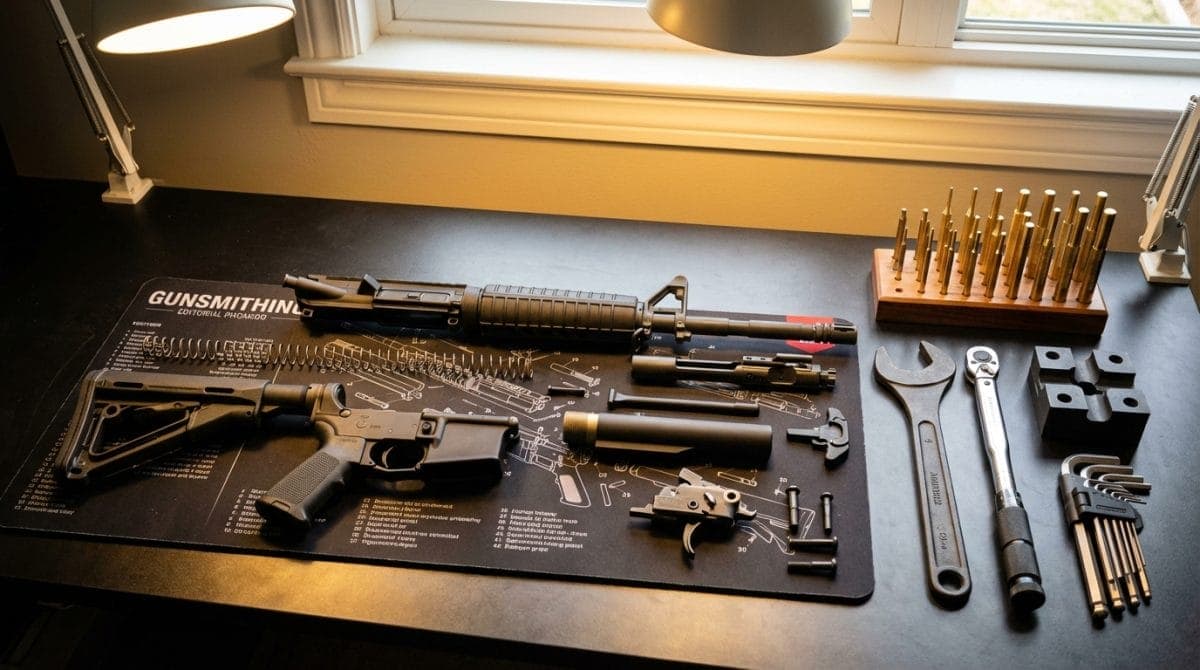
How to Headspace an AR-15 Barrel
By AR-15 Outfitters · April 10, 2026
AR15 Outfitters may earn a commission on purchases made through links in this guide. This does not affect pricing or our recommendations.
Headspace is one of those technical aspects of AR-15 building that separates safe, reliable rifles from potential disasters. While many builders never check headspace on their rifles, understanding how to properly verify this critical dimension can mean the difference between a smooth-running firearm and one that experiences case ruptures, extraction failures, or worse.
What is Headspace?
Headspace refers to the distance between the face of the bolt and a specific point in the chamber when the bolt is fully closed and locked. For the AR-15 chambered in 5.56 NATO or .223 Remington, this measurement is taken from the bolt face to a datum point on the chamber shoulder where the brass casing contacts the chamber walls.
The proper headspace for a 5.56 chamber typically measures between 1.4636 inches (minimum) and 1.4696 inches (maximum), with field rejection at 1.4736 inches. These seemingly tiny differences of just a few thousandths of an inch determine whether your rifle will function safely and reliably.
AR-15 Headspace Explained
When you fire a round, the brass casing expands to seal the chamber. With correct headspace, the case head sits firmly against the bolt face while the shoulder contacts the chamber at the proper point. Too little headspace and you risk difficult chambering, failure to lock, or even out-of-battery detonations. Too much headspace allows excessive case stretching, which can lead to case head separations and potentially catastrophic failures.
Modern AR-15 barrels from reputable manufacturers typically come with properly cut chambers, and quality bolts are manufactured to spec. However, variations in manufacturing tolerances mean that any random bolt and barrel combination might not achieve proper headspace. This is particularly important to check when:
- Building with parts from different manufacturers
- Replacing a bolt or barrel
- Building a rifle that will see heavy use
- Using surplus or unknown origin parts
- Experiencing extraction issues or signs of excessive pressure
Do I Have to Measure Headspace?
While not legally required for personal builds, checking headspace represents good practice. Many builders skip this step and experience no issues, particularly when using matched bolt and barrel sets from quality manufacturers like BCM, Daniel Defense, or Criterion. However, for the cost of borrowing or purchasing a gauge set (typically $60-80), you gain peace of mind and verify a critical safety dimension.
Manufacturers like Colt, FN, and other military contractors check every rifle. As a builder, you’re essentially performing final quality control on your assembled components.
Tools and Gauges Needed
Essential Items:
- Go Gauge: Verifies minimum chamber dimensions (bolt should close)
- No-Go Gauge: Verifies maximum safe dimensions (bolt should not close)
- Upper receiver
- Barrel (properly installed and torqued to 35-80 ft-lbs)
- Bolt (stripped of ejector and extractor)
- Barrel nut and gas tube (optional but can be installed)
Optional but Helpful:
- Field Gauge: Indicates absolute maximum before mandatory rejection
- Bolt disassembly tool for removing ejector and extractor
- Chamber cleaning kit
- Light oil or CLP
Popular gauge manufacturers include Forster, Clymer, and Pacific Tool & Gauge. For 5.56/.223, ensure you purchase the correct caliber gauges, as differences between calibers make gauges non-interchangeable.
How to Check Headspace on an AR-15
Step 1: Prepare the Bolt
Remove the ejector and extractor from your bolt. The ejector spring will interfere with the gauge seating properly, while the extractor can prevent full bolt closure. Most bolts require a 1/16″ roll pin punch to remove the extractor pin. The ejector typically requires a small punch and careful compression of the spring during removal.
Step 2: Clean the Chamber
Use a chamber brush and solvent to thoroughly clean the chamber. Any carbon buildup, brass shavings, or debris can cause false readings. Pay particular attention to the chamber shoulder area where the gauge will make contact.
Step 3: Install the Bolt
Insert the stripped bolt into the bolt carrier and install in the upper receiver. The charging handle can remain installed for easier manipulation.
Step 4: Check with Go Gauge
Lightly oil the go gauge and insert it into the chamber. Gently push the bolt forward using the charging handle. The bolt should close completely with minimal resistance. You should be able to rotate the bolt into battery and the bolt should lock. If the bolt won’t close on a go gauge, your headspace is too tight.
Step 5: Check with No-Go Gauge
Remove the go gauge and insert the no-go gauge. Attempt to close the bolt. The bolt should stop before going into battery, typically feeling solid resistance about 1/8″ to 1/4″ before full closure. If the bolt closes on a no-go gauge, your headspace is excessive.
Step 6: Optional Field Gauge Check
If you have a field gauge, repeat the process. The bolt absolutely must not close on a field gauge. If it does, the rifle is unsafe to fire and requires immediate attention.
Can You Check AR-15 Headspace Without Gauges?
Some builders attempt various workarounds like using pieces of tape on the back of brass casings or measuring with calipers. These methods lack precision and risk missing dangerous conditions. Given that gauge sets cost less than two boxes of match ammunition, proper gauges remain the only reliable method for home builders.
Commercial ammunition can vary in dimensions, and fired brass may have stretched beyond safe limits. Without knowing the exact dimensions of your makeshift gauge, you cannot verify safe headspace.
Differences in Calibers
While this guide focuses on 5.56/.223, the process remains similar for other AR-15 calibers. However, each calibre requires its own specific headspace gauge set:
- .300 Blackout: 1.3565″ (go) to 1.3629″ (no-go)
- 6.5 Grendel: 1.4678″ (go) to 1.4738″ (no-go)
- .308 Winchester: 1.6300″ (go) to 1.6370″ (no-go)
Never use gauges from one caliber to check another. The differences may seem small, but they’re significant enough to create unsafe conditions.
Common Mistakes to Avoid
- Forcing the bolt: Never apply excessive force when checking with any gauge. The bolt should close with normal charging handle pressure only
- Dirty chamber: Carbon buildup creates false “tight” readings
- Wrong caliber gauges: .223 and 5.56 gauges are interchangeable, but not with other calibers
- Assembled bolt: Leaving the ejector installed prevents proper gauge seating
- Temperature extremes: While less critical for checking, extreme temperatures can affect measurements by a thousandth or two
What Happens if Headspace is Too Short?
Insufficient headspace typically manifests as:
- Difficulty chambering rounds
- Bolt failing to go into battery
- Excessive pressure signs on brass
- Potential out-of-battery detonations
If your rifle fails the go gauge test, you’ll need either a different bolt or to have the chamber reamed by a qualified gunsmith.
Too Involved?
If this process seems overwhelming, remember that many quality manufacturers sell matched bolt and barrel sets that typically provide correct headspace. Companies like BCM, Criterion, and Savage produce components that rarely require adjustment. However, learning to check headspace empowers you to verify any combination of parts and diagnose potential issues.
Build This on AR15 Outfitters
Ready to build an AR-15 with confidence? Head over to the AR15 Outfitters Builder to configure your rifle with compatible components. Our builder helps you select matching bolts and barrels from reputable manufacturers, reducing the likelihood of headspace issues.
Start with a quality barrel from proven manufacturers, add a matching bolt or BCG, and use our compatibility checker to ensure all your parts work together. While we always recommend checking headspace on any build, starting with quality components from our builder gives you the best foundation for a safe, reliable rifle.
Disclaimer: AR15 Outfitters does not sell firearms. This site is an information and affiliate resource only. All purchases are completed through licensed retailers. Always comply with all federal, state, and local laws when building or purchasing firearms and firearm components.