
How to Pin and Weld a Muzzle Device
By AR-15 Outfitters · April 10, 2026
AR15 Outfitters may earn a commission on purchases made through links in this guide. This does not affect pricing or our recommendations.
Pin and weld operations transform shorter barrels into legal 16-inch configurations by permanently attaching muzzle devices. This process allows you to run a 14.5-inch barrel with the right muzzle device while maintaining ATF compliance without registering an SBR. Understanding the technical requirements and proper execution makes the difference between a compliant rifle and potential legal issues.
Why Pin and Weld Your AR-15 Muzzle Device
The National Firearms Act (NFA) requires rifles to have barrels measuring at least 16 inches from the closed bolt face to the end of the barrel. Anything shorter classifies as a Short Barreled Rifle (SBR), requiring ATF registration and a $200 tax stamp. Pin and weld procedures allow you to permanently attach a muzzle device to reach that 16-inch minimum without the NFA paperwork.
Most commonly, builders pair a 14.5-inch barrel with a muzzle brake or flash hider measuring at least 1.5 inches. Once permanently attached through pinning and welding, the ATF considers the muzzle device part of the barrel length. This gives you a more maneuverable rifle without the legal complications of an SBR.
Complete Parts List for Pin and Weld
Before starting your pin and weld project, gather these components:
- 14.5-inch barrel: Choose a quality barrel with proper gas port sizing for reliable function
- Muzzle device: Must add at least 1.5 inches to reach 16-inch overall length
- Flash hiders typically measure 1.5-2.5 inches
- Muzzle brakes generally run 2-3 inches
- Compensators vary from 1.5-2.5 inches
- Crush washer or shim kit: For proper timing and alignment
- Drill bit: 3/32-inch (0.09375-inch) diameter, high-speed steel or cobalt
- Straight pin: 3/32-inch diameter, 0.25-inch length minimum
- Rocksett or high-temperature thread locker: For additional security
Required Tools for Pin and Weld
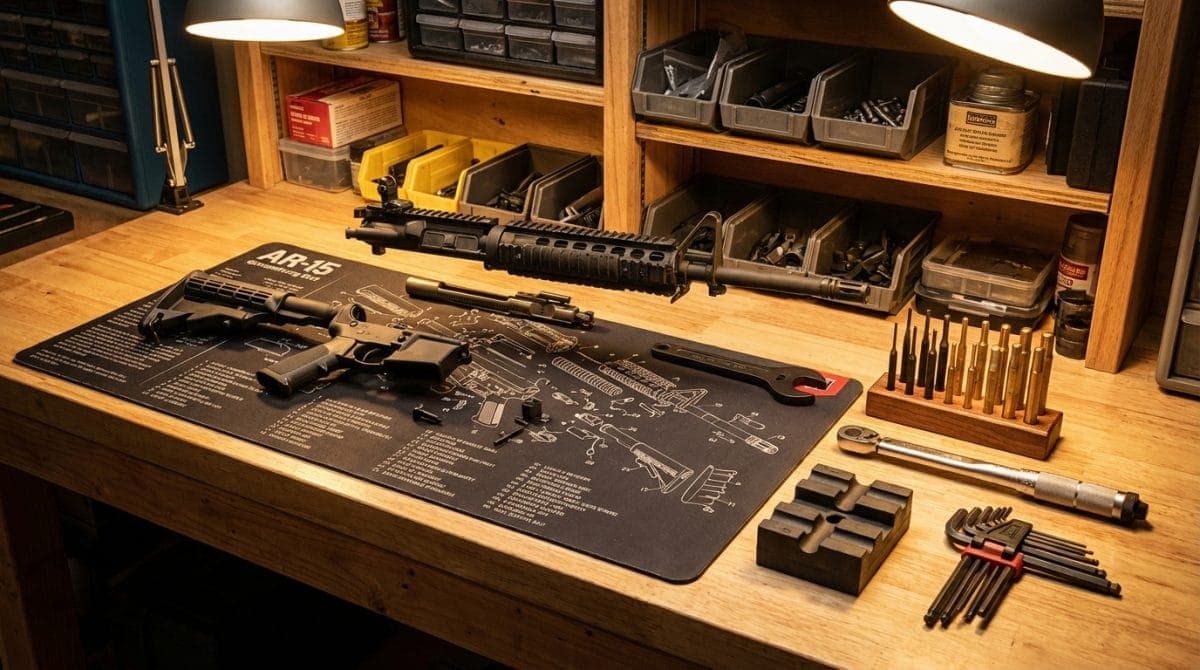
Professional results require proper tooling. Here’s what you need:
- TIG welder: 80-120 amp capacity for clean, precise welds
- Drill press or milling machine: Hand drills work but increase error risk
- Center punch: For marking exact drill locations
- Barrel vise blocks: Secure the barrel without marring
- Action wrench: If working with a barreled upper
- Torque wrench: Accurate to 30-40 ft-lbs
- Thread pitch gauge: Verify 1/2×28 threads
- Depth gauge or calipers: Measure drill depth precisely
- Files and sandpaper: 220-400 grit for finish work
Step-by-Step Pin and Weld Instructions
Step 1: Verify Legal Barrel Length
Measure from the closed bolt face to the end of the barrel threads. For AR-15 platforms, this typically means inserting a cleaning rod down the barrel until it touches the bolt face, then marking where it exits the muzzle. Your barrel plus muzzle device must total at least 16 inches.
Example calculation: 14.5-inch barrel + 2-inch muzzle brake = 16.5 inches total length. This provides 0.5-inch safety margin above the legal minimum.
Step 2: Install and Time the Muzzle Device
Clean the barrel threads with solvent and a bronze brush. Apply a thin layer of Rocksett to the threads, focusing on the first 3-4 threads. Thread the muzzle device hand-tight, then install your crush washer or shims.
Torque the muzzle device to 30-35 ft-lbs while ensuring proper alignment. For muzzle brakes, ports should align vertically. Flash hiders need the solid bottom portion oriented downward. Let the Rocksett cure for 24 hours before proceeding.
Step 3: Locate and Mark the Pin Position
The pin location sits at the 6 o’clock position (bottom dead center) where the barrel meets the muzzle device. This placement allows future removal if needed while hiding the weld from normal viewing angles.
Use a center punch to mark the exact drill point. The hole should penetrate both the muzzle device and barrel wall, typically requiring 0.125-0.150 inches of depth into the barrel itself.
Step 4: Drill the Pin Hole
Secure the barrel in proper vise blocks. Using a drill press set to 500-800 RPM, drill straight through the muzzle device base into the barrel. Apply cutting oil and drill in stages, clearing chips frequently.
Target depth: 0.250-0.300 inches total, with at least 0.125 inches penetrating the barrel wall. Going too deep weakens the barrel; too shallow risks the pin working loose.
Step 5: Insert and Weld the Pin
Cut your pin to length, leaving it slightly proud of the surface (0.020-0.030 inches). Insert the pin fully, ensuring it seats against the bottom of the hole.
Set your TIG welder to 80-100 amps with pure argon shielding gas. Create a small weld pool around the pin, fusing it to the surrounding metal. Build up the weld slightly above the surface for grinding flush later.
Step 6: Finish the Weld
Allow the weld to cool completely. File the weld flush with the muzzle device surface, starting with a coarse file and progressing to 220-grit sandpaper. Finish with 400-grit for a smooth appearance.
Apply cold blue or matching finish to blend the weld area. Properly done, the pin and weld should be nearly invisible from normal viewing angles.
Common Pin and Weld Mistakes to Avoid
Learn from others’ errors to ensure your pin and weld meets ATF requirements:
- Inadequate penetration: Pins must penetrate the actual barrel, not just the muzzle device threads
- Wrong pin angle: Drilling at angles other than 90 degrees weakens the joint
- Oversized holes: Holes larger than 1/8-inch may compromise barrel integrity
- Insufficient weld coverage: The weld must fully encompass the pin circumference
- Improper timing: Muzzle devices must be properly aligned before permanent attachment
What Makes a Good Pin and Weld?
Quality pin and weld work shows these characteristics:
- Pin hole drilled perpendicular to the barrel axis
- Smooth, complete weld coverage over the entire pin
- No visible gaps or voids in the weld
- Finished surface blends seamlessly with the muzzle device
- Maintains concentricity with the bore
Identifying Bad Pin and Weld Work
Reject or redo any pin and weld showing:
- Visible gaps around the pin
- Excessive heat discoloration indicating overheating
- Pin holes drilled at angles
- Welds that don’t fully cover the pin
- Signs of muzzle device movement or looseness
Professional Gunsmith Services
While DIY pin and weld remains possible, many builders choose professional gunsmith services. Typical costs range from $75-150, including labor and refinishing. Benefits include:
- Proper equipment and expertise
- Liability coverage if issues arise
- Professional finishing to match your rifle
- Verification of ATF compliance
When selecting a gunsmith, verify their experience with pin and weld operations specifically. Request examples of previous work and confirm they understand current ATF requirements.
Removing Pinned and Welded Muzzle Devices
Despite being “permanent,” pinned and welded muzzle devices can be removed when necessary. The process involves:
- Carefully grinding away the weld material
- Drilling out the pin completely
- Unthreading the muzzle device normally
- Assessing barrel thread condition
- Re-threading if necessary (may shorten barrel)
This destructive process typically ruins the muzzle device and may require barrel work. Plan accordingly if you anticipate future changes.
Build This on AR15 Outfitters
Ready to configure your pin and weld build? The AR15 Outfitters Builder lets you select compatible components and verify overall length before purchasing.
Start with these popular 14.5-inch barrel options in the builder:
- Select a quality 14.5-inch barrel from manufacturers like BCM, Daniel Defense, or Criterion
- Choose a muzzle device adding at least 1.5 inches for legal compliance
- Add necessary tools and accessories for installation
- Compare prices across multiple vendors instantly
The builder automatically calculates total barrel length with your selected muzzle device, ensuring ATF compliance before you buy. Use the share feature to get feedback from the community on your pin and weld configuration.
Visit ar15outfitters.com/builder to start configuring your compliant 16-inch pin and weld build today. The platform’s compatibility checking prevents ordering mismatched components, while price tracking helps you buy at the right time.
Disclaimer: AR15 Outfitters does not sell firearms. This site is an information and affiliate resource only. All purchases are completed through licensed retailers. Always comply with all federal, state, and local laws when building or purchasing firearms and firearm components.