
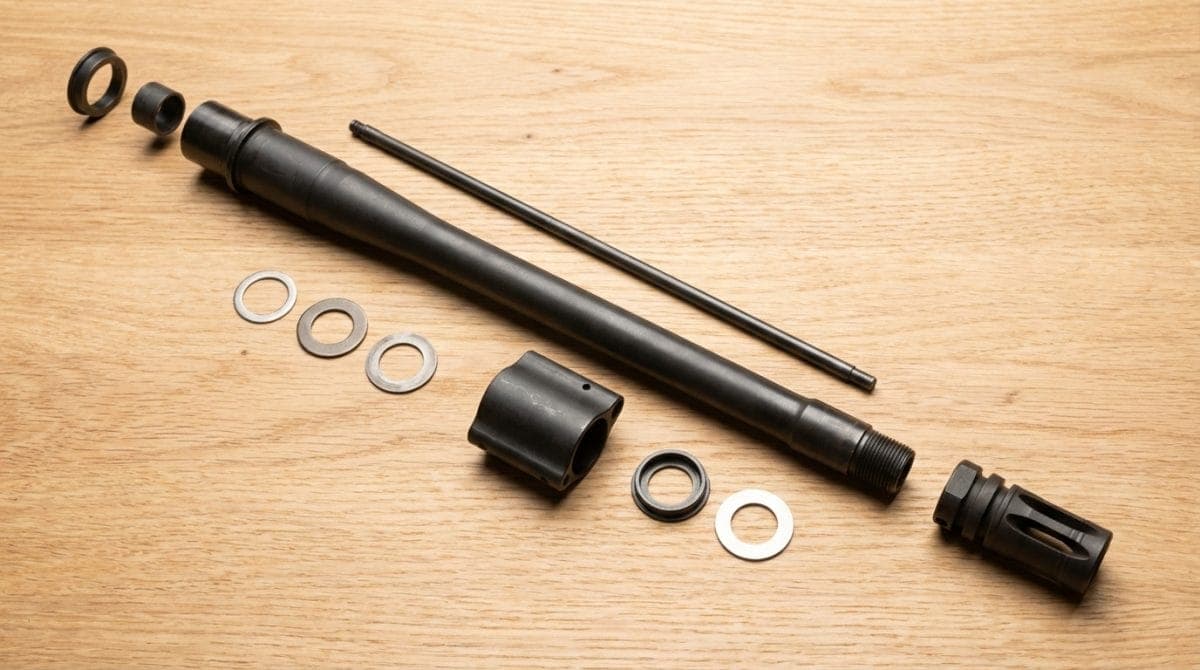
Best .300 Blackout Barrels
By AR-15 Outfitters · April 9, 2026
AR15 Outfitters may earn a commission on purchases made through links in this review. This does not affect our ratings or recommendations. All opinions are our own.
The .300 Blackout cartridge has transformed how we think about AR-15 versatility. Whether you’re building a dedicated .300 BLK rifle or adding an upper to your existing AR-15, choosing the right barrel determines everything from accuracy to reliability. Let’s explore the best 300 Blackout barrels AR-15 builders are using today.
What Makes a Great .300 Blackout Barrel
Before diving into specific recommendations, understanding what separates good barrels from great ones helps you make an informed decision. The .300 Blackout presents unique considerations compared to 5.56 NATO barrels.
Barrel Length Considerations
The .300 Blackout was designed to achieve optimal performance from shorter barrels. Most builders choose between 8.5 and 16 inches, with each length offering distinct advantages:
- 8.5 to 10.5 inches: Maximum powder burn efficiency, ideal for suppressors, compact package
- 12.5 to 14.5 inches: Balanced performance, moderate velocity gains, versatile platform
- 16 inches: No NFA requirements, maximum velocity (approximately 2,300 fps with 110gr supersonic loads)
Gas System Length
Unlike 5.56 barrels where gas system length varies significantly, .300 Blackout typically uses a pistol-length gas system regardless of barrel length. This standardization simplifies parts selection when using the AR15 Outfitters builder.
Twist Rate
The 1:7 or 1:8 twist rate works best for .300 Blackout, stabilizing both lightweight supersonic rounds (110-125 grains) and heavy subsonic loads (200-220 grains). Most quality barrels feature 1:8 twist, providing optimal stability across the entire weight spectrum.
Top .300 Blackout Barrel Recommendations
1. Ballistic Advantage 10.3″ Government Profile
Ballistic Advantage consistently delivers exceptional value in their Modern Series barrels. Their 10.3″ government profile .300 Blackout barrel exemplifies this commitment.
Key Features:
- 4150 Chrome Moly Vanadium steel construction
- QPQ Corrosion Resistant Finish (Salt bath nitride)
- 1:7 twist rate
- Sub-MOA accuracy guarantee with match ammunition
- .750″ gas block journal
- 1/2×28 thread pitch
Best For: Builders seeking professional-grade accuracy without breaking the budget. The 10.3″ length provides excellent suppressor performance while maintaining reliability with both subsonic and supersonic ammunition.
Price Range: $140-180
Pros: Outstanding accuracy for the price point, durable QPQ finish resists corrosion better than phosphate, guaranteed sub-MOA performance
Cons: Government profile adds weight compared to lightweight options, may require adjustable gas block for optimal cycling with certain subsonic loads
2. Faxon Firearms 10.5″ Gunner Profile
Faxon’s Gunner profile represents their approach to weight reduction without sacrificing rigidity. This profile removes material between the gas block and muzzle while maintaining a thicker profile where it matters most.
Key Features:
- 416R stainless steel or 4150 CMV options
- Button rifled, stress relieved
- 1:8 twist rate
- Pistol length gas system
- 5/8×24 thread pitch available
- Weight: 19 ounces (4150 CMV version)
Best For: Builders prioritizing weight savings for home defense or competition builds. The Gunner profile shaves approximately 6 ounces compared to government profile barrels.
Price Range: $160-210
Pros: Excellent balance between weight and accuracy, 5/8×24 threading accommodates larger .30 caliber suppressors, lifetime warranty
Cons: Stainless option shows wear more visibly, lighter profile may heat up faster during rapid fire
3. Criterion Barrels 12.5″ Hybrid Profile
When accuracy ranks as your top priority, Criterion delivers match-grade performance. Their hand-lapped barrels consistently produce exceptional groups.
Key Features:
- 416R stainless steel, hand-lapped bore
- 1:8 twist rate, 6 groove rifling
- Hybrid profile balances weight and rigidity
- .750″ gas block journal with dimpling
- 11-degree target crown
- Headspaced bolt available
Best For: Precision shooters and hunters demanding maximum accuracy. The 12.5″ length provides a velocity advantage (approximately 75-100 fps) over 10.5″ barrels while remaining compact.
Price Range: $290-340
Pros: Match-grade accuracy typically produces 0.5-0.75 MOA groups with quality ammunition, exceptional bore consistency, option to purchase headspaced bolt
Cons: Premium pricing, longer lead times due to hand-lapping process, stainless finish requires more maintenance
4. Daniel Defense 16″ S2W Profile
Daniel Defense brings their military contract experience to the civilian market with their Strength-to-Weight (S2W) profile barrels.
Key Features:
- Cold hammer forged 4150 CMV steel
- Chrome-lined bore and chamber
- 1:8 twist rate
- Mid-length gas system (16″ only)
- Mil-spec phosphate finish under DD’s proprietary coating
- Pinned low-profile gas block available
Best For: Builders who want no compromises on durability and don’t require NFA paperwork. The 16″ length maximizes velocity for hunting applications.
Price Range: $340-390
Pros: Chrome lining extends barrel life to 20,000+ rounds, cold hammer forging creates exceptional bore consistency, proven military heritage
Cons: Higher price point, heavier than comparable barrels, 16″ length negates some .300 Blackout advantages
5. Rosco Manufacturing 8.5″ Bloodline
Rosco’s Bloodline series targets builders seeking maximum compactness without sacrificing quality. Their 8.5″ barrel pushes the limits of .300 Blackout efficiency.
Key Features:
- 416R stainless steel
- 1:7 twist rate
- Pistol length gas system
- .750″ gas block journal
- Machine-dimpled for gas block
- Weight: 17 ounces
Best For: Suppressor-focused builds where overall length matters most. The 8.5″ barrel keeps subsonic loads quiet while maintaining reliability.
Price Range: $130-165
Pros: Compact package ideal for vehicle or home defense, excellent suppressor host, competitive pricing for stainless construction
Cons: Reduced velocity with supersonic loads (approximately 2,000 fps with 110gr), increased muzzle blast when unsuppressed
6. BCM BFH 9″ Enhanced Lightweight
Bravo Company Manufacturing applies their battlefield-proven approach to .300 Blackout with their BFH (Barrel, Forged, Hammer) line.
Key Features:
- Cold hammer forged construction
- Enhanced Lightweight Profile (ELW)
- Chrome-lined bore and chamber
- 1:7 twist rate
- Manganese phosphate finish
- HP/MPI tested
Best For: Professional users and serious enthusiasts who value proven reliability. BCM’s quality control ensures consistent performance.
Price Range: $270-320
Pros: Exceptional durability from chrome lining and cold hammer forging, lightweight profile reduces fatigue, extensive testing ensures reliability
Cons: Limited availability due to high demand, chrome lining may slightly reduce peak accuracy potential
Comparison Table
| Barrel Model | Length | Material | Profile | Twist Rate | Weight | Price Range | Best Use Case |
|---|---|---|---|---|---|---|---|
| BA Modern Series | 10.3″ | 4150 CMV | Government | 1:7 | 22 oz | $140-180 | All-around value |
| Faxon Gunner | 10.5″ | 4150/416R | Gunner | 1:8 | 19 oz | $160-210 | Lightweight builds |
| Criterion Hybrid | 12.5″ | 416R SS | Hybrid | 1:8 | 24 oz | $290-340 | Precision shooting |
| DD S2W | 16″ | 4150 CMV | S2W | 1:8 | 28 oz | $340-390 | Maximum velocity |
| Rosco Bloodline | 8.5″ | 416R SS | Standard | 1:7 | 17 oz | $130-165 | Compact suppressed |
| BCM BFH ELW | 9″ | 4150 CMV | ELW | 1:7 | 18 oz | $270-320 | Duty use |
Buying Guide: Selecting Your .300 Blackout Barrel
Define Your Primary Use
Start by identifying your build’s primary purpose. This decision drives every other specification:
Home Defense: Prioritize reliability and handling. A 9-10.5″ barrel with standard or lightweight profile offers excellent maneuverability. Chrome-lined bores provide extra reliability with defensive ammunition.
Hunting: Choose 12.5-16″ barrels for increased velocity. The extra 200-300 fps from longer barrels extends effective range and improves terminal performance. Match-grade barrels like Criterion provide the accuracy needed for ethical shots.
Range Toy/Suppressor Host: The 8.5-10.5″ range maximizes suppressor effectiveness while keeping the package compact. Stainless barrels often provide better accuracy for precision work.
Material Selection
Two primary materials dominate quality AR-15 barrels:
4150 Chrome Moly Vanadium: The military standard, offering excellent durability and heat resistance. Typical barrel life exceeds 15,000 rounds with proper maintenance. Chrome-lined versions extend this further but may sacrifice 0.25-0.5 MOA accuracy.
416R Stainless Steel: Machines more consistently, potentially offering better accuracy. However, stainless barrels typically show throat erosion 20-30% faster than CMV alternatives. Best for precision-focused builds where peak accuracy matters more than ultimate longevity.
Budget Considerations
Quality .300 Blackout barrels span a wide price range. Here’s what to expect at each level:
$100-200: Reliable barrels from manufacturers like Ballistic Advantage and Rosco. Expect 1-2 MOA accuracy with quality ammunition, perfect for most applications.
$200-300: Premium features like hand-lapping (Criterion) or cold hammer forging (BCM). Accuracy typically improves to 0.75-1 MOA.
$300+: Top-tier options from Daniel Defense, Noveske, or custom shops. Marginal improvements over the $200-300 range for most shooters.
Gas System and Parts Compatibility
The .300 Blackout’s pistol-length gas system simplifies parts selection. When building your rifle using the AR15 Outfitters shop, ensure compatibility:
- Gas block journal: Most use .750″ but verify before ordering
- Gas tube: Pistol length for barrels up to 16″
- Muzzle device: 1/2×28 remains standard, though some prefer 5/8×24 for .30 caliber suppressors
- Buffer system: Typically requires standard carbine buffer and spring, though adjustments may be needed for subsonic loads
Installation Tips and Considerations
Proper barrel installation ensures safety and accuracy. Key points include:
- Torque barrel nut to 30-80 ft-lbs (typically 45-50 ft-lbs for standard nuts)
- Use proper upper receiver vice blocks to prevent damage
- Apply aeroshell grease or anti-seize to threads
- Verify headspace with .300 Blackout go/no-go gauges
- Time muzzle device correctly if using suppressor
Common Pitfalls to Avoid
Learning from others’ mistakes saves time and money:
Mixing .300 BLK and 5
FTC Disclosure: AR15 Outfitters earns a commission on purchases made through our affiliate links at no additional cost to you. This does not affect our recommendations.
Disclaimer: AR15 Outfitters does not sell firearms. This site is an information and affiliate resource only. All purchases are completed through licensed retailers. Always comply with all federal, state, and local laws when building or purchasing firearms and firearm components.
More Reviews
Best AR-15 BCG for the Money. Find the best parts and prices on the AR15 Outfitters builder.
ReviewBest AR-15 Lower Receivers Under $100Best AR-15 Lower Receivers Under $100. Find the best parts and prices on the AR15 Outfitters builder.
ReviewBest AR-15 Triggers Under $150Best AR-15 Triggers Under $150. Find the best parts and prices on the AR15 Outfitters builder.