
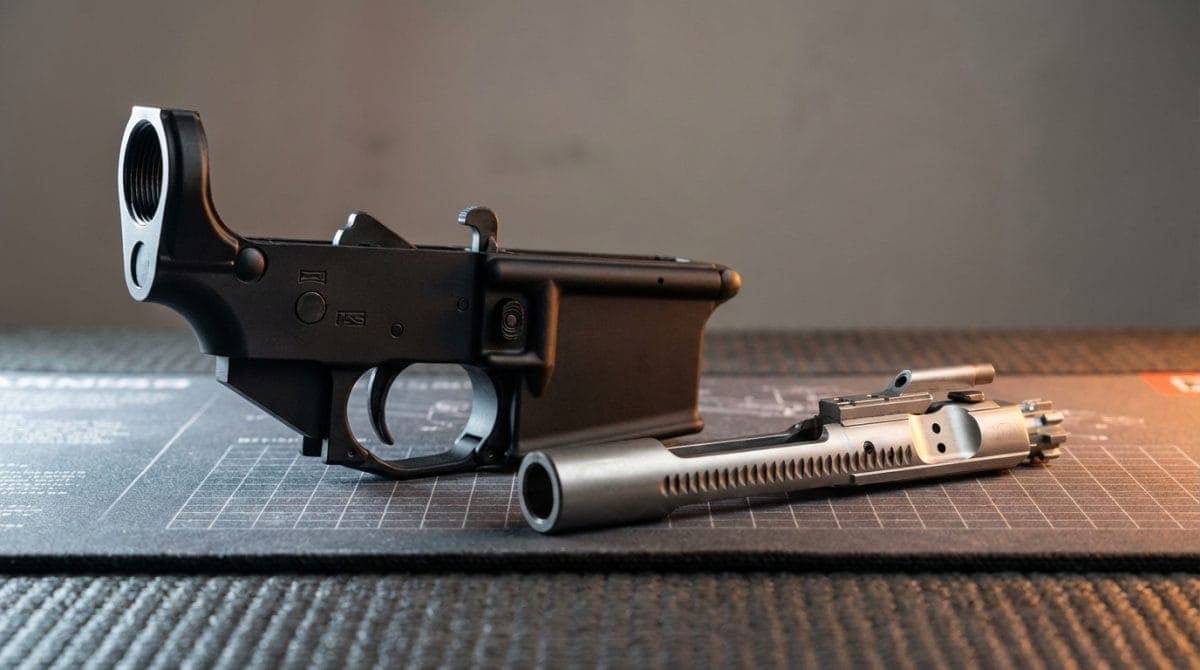
Best AR-15 Gas Blocks: Adjustable vs Low Profile
By AR-15 Outfitters · April 9, 2026
AR15 Outfitters may earn a commission on purchases made through links in this review. This does not affect our ratings or recommendations. All opinions are our own.
Selecting the right gas block for your AR-15 build directly impacts reliability, recoil management, and overall shooting experience. Whether you’re building your first rifle or upgrading an existing setup, understanding the differences between adjustable and low profile gas blocks helps ensure optimal performance for your specific needs.
The gas block serves as the heart of your AR-15’s operating system, directing gas from the barrel port through the gas tube to cycle the action. While this seems straightforward, the choice between adjustable and low profile options significantly affects how your rifle performs with different ammunition types, barrel lengths, and shooting applications.
What to Look for in AR-15 Gas Blocks
Before diving into specific recommendations, understanding key selection criteria helps narrow your options. The best AR-15 gas blocks share several important characteristics that contribute to reliable function and long service life.
Material and Construction
Quality gas blocks typically use 4140 or 4150 steel, offering excellent strength and heat resistance. Some manufacturers use 303 or 416 stainless steel for enhanced corrosion resistance. Aluminum gas blocks, while lighter, generally aren’t recommended for hard-use applications due to thermal expansion differences with steel barrels.
Mounting Systems
Set screw models dominate the market due to their simplicity and reliability. Most use two to three set screws torqued to 30-35 inch-pounds. Clamp-on designs distribute clamping force more evenly and work well with dimpled barrels. Pin-on blocks offer the most secure attachment but require professional installation.
Inner Diameter and Sizing
Gas blocks come in three standard sizes: 0.625″ for pencil barrels, 0.750″ for standard government profiles, and 0.875″ or 0.936″ for bull barrels. Always verify your barrel’s gas block journal diameter before ordering.
Top Adjustable Gas Block Recommendations
1. Superlative Arms Adjustable Gas Block
The Superlative Arms adjustable gas block stands out for its patented bleed-off design that vents excess gas forward rather than simply restricting flow. This design reduces gas system pressure without increasing back pressure, resulting in smoother operation and less gas in the shooter’s face when running suppressed.
Key Features:
- 30-position detent adjustment system with audible clicks
- 416 stainless steel construction with melonite finish
- Available in clamp-on and set screw versions
- 0.875″ height for low profile rail compatibility
Best For: Shooters frequently switching between suppressed and unsuppressed configurations or those running multiple ammunition types. The bleed-off design particularly benefits left-handed shooters who experience more gas-to-face issues.
Price Range: $90-100
Pros:
- Predictable adjustment with detent positions
- Reduced fouling compared to restriction-only designs
- Excellent corrosion resistance
Cons:
2. JP Enterprises Adjustable Gas Block
JP Enterprises brings competition-proven design to their adjustable gas blocks, featuring a simple set screw adjustment without detents. This allows infinite adjustment for precise tuning, particularly valuable for competition shooters seeking minimal recoil impulse.
Key Features:
- 4140 steel with QPQ black nitride finish
- Stainless steel adjustment screw with locking set screw
- Available in all standard journal sizes
- 0.875″ height profile
Best For: Competition shooters and precision rifle builders who need exact gas system tuning for specific loads. Also excellent for lightweight builds where minimizing reciprocating mass improves accuracy.
Price Range: $75-85
Pros:
- Infinite adjustment range for precise tuning
- Proven track record in competition use
- Robust locking mechanism prevents adjustment shifts
Cons:
3. Wojtek Weaponry Adjustable Gas Block
Wojtek Weaponry offers exceptional value in their adjustable gas blocks, delivering reliable performance at an accessible price point. Their click-adjustable design features 12 positions, providing sufficient range for most applications without overwhelming new builders.
Key Features:
- 4140 steel construction with nitride finish
- 12-position detent adjustment
- Simple set screw attachment
- 0.875″ low profile height
Best For: First-time AR-15 builders wanting adjustability without breaking the budget. Also suitable for general-purpose rifles that occasionally run different ammunition types.
Price Range: $40-50
Pros:
- Outstanding value proposition
- Simple, reliable design
- Good customer support from a small US manufacturer
Cons:
Top Low Profile Gas Block Recommendations
4. BCM Low Profile Gas Block
Bravo Company Manufacturing’s low profile gas block exemplifies the “set it and forget it” philosophy. Built to military specifications with generous gas port sizing, this block prioritizes reliability over adjustability.
Key Features:
- 4140 steel with phosphate finish
- Set screw mounting with included 10-32 screws
- 0.750″ standard journal size
- True mil-spec gas port diameter
Best For: Duty rifles, home defense builds, and anyone prioritizing absolute reliability over tuning capability. Ideal for builds using quality mil-spec ammunition.
Price Range: $40-45
Pros:
- Bomb-proof reliability
- Proper gas port sizing prevents undergassing
- Excellent quality control
Cons:
5. Aero Precision Low Profile Gas Block
Aero Precision delivers consistent quality at a reasonable price with their low profile gas blocks. These blocks feature precise machining and a durable finish that stands up to high round counts.
Key Features:
- 4140 steel construction
- Melonite QPQ finish for corrosion resistance
- Available in all standard sizes
- Includes roll pin for pinned installation option
Best For: Builders seeking quality parts at reasonable prices, particularly those already using Aero Precision components for compatibility.
Price Range: $25-30
Pros:
- Excellent price-to-quality ratio
- Melonite finish superior to basic phosphate
- Wide availability
Cons:
- No distinguishing features beyond solid construction
- Generic packaging and instructions
6. Geissele Super Gas Block
Geissele Automatics brings their renowned attention to detail to this premium gas block. The unique geometry and “bomb-proof” construction make it a favorite among professional users.
Key Features:
- 4140 steel with manganese phosphate finish
- Unique geometry prevents rotation
- Hardened set screws with thread locker pre-applied
- Precision reamed gas port
Best For: High-end builds where component quality takes precedence over price. Professional users who need absolute confidence in their equipment.
Price Range: $60-70
Pros:
- Exceptional build quality
- Innovative anti-rotation design
- Excellent customer support
Cons:
- Premium pricing for a non-adjustable block
- Overkill for casual shooting applications
Comparison Table
| Model | Type | Material | Finish | Adjustment | Price Range | Best Use Case |
|---|---|---|---|---|---|---|
| Superlative Arms | Adjustable | 416 SS | Melonite | 30 positions | $90-100 | Suppressed shooting |
| JP Enterprises | Adjustable | 4140 Steel | QPQ Nitride | Infinite | $75-85 | Competition |
| Wojtek Weaponry | Adjustable | 4140 Steel | Nitride | 12 positions | $40-50 | Budget builds |
| BCM | Low Profile | 4140 Steel | Phosphate | None | $40-45 | Duty use |
| Aero Precision | Low Profile | 4140 Steel | Melonite | None | $25-30 | General purpose |
| Geissele | Low Profile | 4140 Steel | Phosphate | None | $60-70 | Premium builds |
Buying Guide: Adjustable vs Low Profile
Choosing between adjustable and low profile gas blocks depends on your specific needs and shooting applications. Understanding when each type excels helps make an informed decision.
When to Choose Adjustable Gas Blocks
Adjustable gas blocks shine in several scenarios. If you plan to shoot suppressed, adjustability becomes nearly essential. Suppressors increase back pressure by 30-50% in most cases, leading to violent cycling and excessive gas in the shooter’s face with standard blocks. Adjustable blocks let you reduce gas flow to compensate.
Competition shooters benefit from precise gas tuning to minimize recoil and muzzle movement. By restricting gas flow to the minimum required for reliable function, you reduce reciprocating mass and bolt velocity. This translates to flatter shooting and faster follow-up shots.
Builders using non-standard configurations also need adjustability. Short barrels (under 14.5″), pistol-length gas systems, and lightweight bolt carrier groups often require tuning for reliable function across different ammunition types.
When to Choose Low Profile Gas Blocks
Low profile fixed gas blocks remain the right choice for many builds. Military and law enforcement users typically prefer the simplicity and reliability of fixed blocks. With no adjustment screws to loosen or detents to wear, fixed blocks offer one less potential failure point.
General-purpose rifles shooting standard ammunition benefit from properly sized fixed blocks. If you primarily shoot 55-62 grain ammunition through a 16″ or longer barrel, a quality low profile block provides reliable function without complexity.
Budget-conscious builders can allocate funds elsewhere when a fixed block meets their needs. The $50-60 saved compared to premium adjustable options buys better ammunition or upgrades other components.
Installation Considerations
Proper installation ensures reliable function regardless of block type. Start by thoroughly degreasing the barrel journal and gas block bore with acetone or brake cleaner. Any oil residue prevents proper torque retention.
For set screw models, apply medium-strength thread locker (Loctite 243 or equivalent) to clean, dry threads. Torque screws to 30-35 inch-pounds in an alternating pattern. Some builders prefer to dimple their barrels for added security, though this isn’t strictly necessary with proper installation.
Clamp-on blocks require careful alignment to prevent canting. Use a gas tube as an alignment guide, ensuring smooth insertion without binding. Torque clamp screws gradually in small increments, checking alignment frequently.
Gas System Length Compatibility
Gas blocks work with all AR-15 gas system lengths, but some combinations perform better than others. Rifle-length systems on 18-20″ barrels typically have sufficient dwell time for reliable function with fixed blocks. Carbine-length systems on 16″ barrels often run overgassed, making adjustable blocks beneficial for tuning.
Pistol-length systems on short barrels almost always benefit from adjustability. The short dwell time and high port pressure create a narrow operating window that adjustable blocks help optimize.
Making Your Selection
The best AR-15 gas blocks balance reliability, features, and value for your specific needs. Adjustable blocks from Superlative Arms and JP Enterprises offer premium performance for demanding applications. Budget-minded builders find excellent value in Wojtek Weaponry’s adjustable option or Aero Precision’s fixed blocks.
Consider your primary use case when selecting between adjustable and low profile designs. Suppressor users and competition shooters typically benefit from adjustability, while duty-use and general-purpose builds often perform best with quality fixed blocks.
Remember that gas block selection represents just one component in your complete AR-15 build. Barrel length, gas system length, buffer weight, and ammunition selection all interact to determine overall function. Use the AR15 Outfitters builder tool to ensure compatibility between all components.
Find These Parts
Ready to select the perfect gas block for your build? Visit the AR15 Outfitters builder to compare these and other gas block options with real-time pricing from multiple retailers. The builder ensures compatibility between your chosen gas block and other components while finding the best prices available.
Browse our
FTC Disclosure: AR15 Outfitters earns a commission on purchases made through our affiliate links at no additional cost to you. This does not affect our recommendations.
Disclaimer: AR15 Outfitters does not sell firearms. This site is an information and affiliate resource only. All purchases are completed through licensed retailers. Always comply with all federal, state, and local laws when building or purchasing firearms and firearm components.
More Reviews
Best Complete AR-15 Under $2000. Find the best parts and prices on the AR15 Outfitters builder.
ReviewBest Complete AR-15 Under $700Best Complete AR-15 Under $700. Find the best parts and prices on the AR15 Outfitters builder.
ReviewBest AR-15 Red Dot SightsBest AR-15 Red Dot Sights. Find the best parts and prices on the AR15 Outfitters builder.