
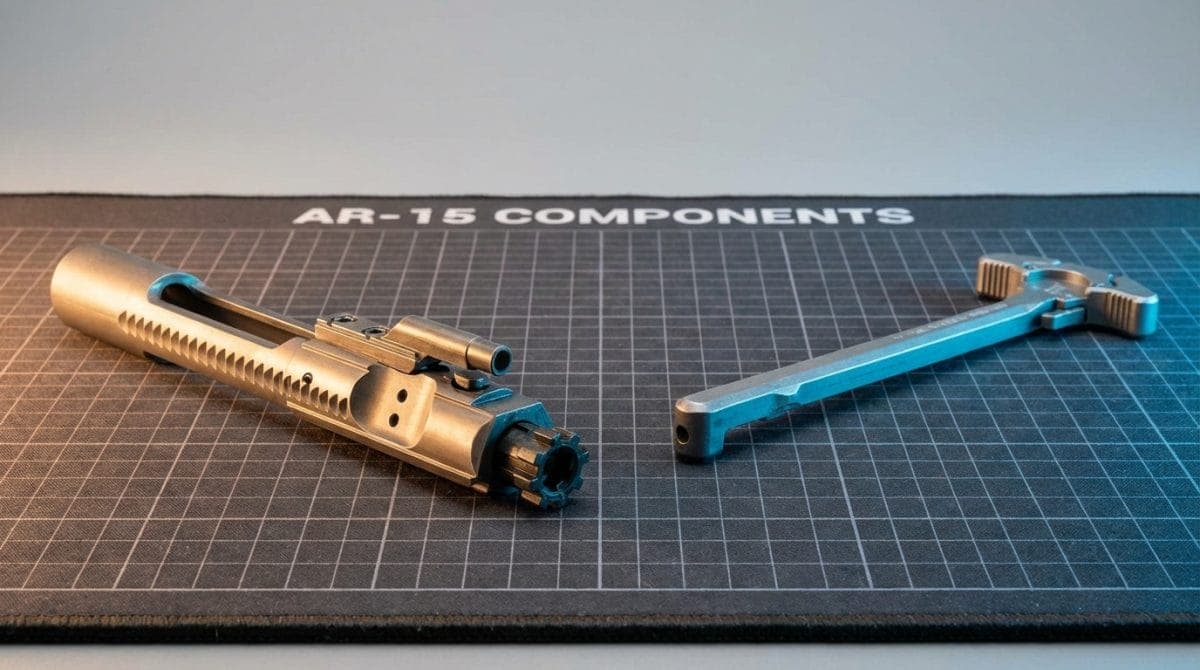
Best AR-15 Gas Blocks: Adjustable vs Low Profile
By AR-15 Outfitters · April 9, 2026
AR15 Outfitters may earn a commission on purchases made through links in this review. This does not affect our ratings or recommendations. All opinions are our own.
The gas block serves as the heart of your AR-15’s operating system, directing gas from the barrel into the gas tube to cycle the action. Whether you’re building your first AR-15 or upgrading an existing rifle, selecting between adjustable and low profile gas blocks can significantly impact your rifle’s performance, reliability, and versatility.
This guide covers the best AR-15 gas blocks currently available, comparing adjustable models that offer tuning capability against low profile fixed designs that prioritize simplicity and reliability. We’ll examine real-world performance data, material specifications, and compatibility considerations to help you make an informed decision for your next build.
What Makes a Quality Gas Block
Before diving into specific recommendations, understanding the key features that separate quality gas blocks from inferior options will help guide your selection:
Material and Construction
The best AR-15 gas blocks typically use 4140 steel, 416 stainless steel, or 6061-T6 aluminum. Steel blocks handle heat better and resist erosion from hot gases, making them ideal for high-volume shooting. A quality steel block should measure 0.750″ or 0.625″ in diameter (matching your barrel’s gas journal) with tolerances within +/- 0.002″.
Mounting Systems
Set screw models dominate the market due to their simplicity and reliability. Quality blocks feature hardened steel set screws (typically 10-32 thread) that should be torqued to 30-35 inch-pounds. Some manufacturers include dimpling jigs to properly locate set screw positions on your barrel.
Gas Port Alignment
Proper gas port alignment proves critical for reliable function. Low profile designs should include alignment marks or use a captured design that indexes off the barrel shoulder. Adjustable blocks need clear detent positions or click adjustments to maintain consistent settings.
Best Adjustable Gas Blocks
1. Superlative Arms Bleed-Off Gas Block
Price Range: $80-100
Material: 416 stainless steel with melonite finish
Adjustment: 30 position click adjustment with bleed-off technology
The Superlative Arms design stands apart by bleeding excess gas forward instead of restricting flow at the gas port. This patented system reduces back pressure, keeping your bolt carrier group cleaner while maintaining consistent cycling. The 30 detent positions provide precise tuning increments, with each click representing approximately 3% change in gas flow.
Best for: Suppressed rifles and precision builds where minimizing gas in the face matters. The bleed-off design typically reduces felt recoil by 15-20% compared to standard restriction-type adjustable blocks.
Installation tip: Use the included 3/32″ long hex key and apply medium-strength threadlocker to set screws. The adjustment screw requires no thread locker as the detent ball provides retention.
2. SLR Rifleworks Sentry 7 Titanium
Price Range: $125-145
Material: Grade 5 titanium (6AL-4V)
Adjustment: Infinite adjustment with locking screw
At just 0.9 ounces, the Sentry 7 represents the lightweight option for builders counting every gram. The titanium construction resists erosion while handling temperatures up to 1,000°F without deformation. The adjustment screw uses a captured design preventing loss during maintenance.
Best for: Ultra-light builds and competition rifles where weight matters. The titanium construction saves approximately 1.5 ounces compared to steel equivalents.
Visit the AR15 Outfitters builder to see how different gas block weights affect your overall build.
3. JP Enterprises Adjustable Gas Block
Price Range: $90-110
Material: 416 stainless steel with QPQ black nitride finish
Adjustment: Tension-secured infinite adjustment
JP’s simple yet effective design uses a standard socket head screw for adjustment with a secondary locking screw to maintain settings. The generous adjustment range accommodates everything from lightweight competition loads to full-power ammunition. The black nitride finish provides excellent corrosion resistance with a Rockwell hardness of 68-72.
Best for: Competition shooters who frequently change ammunition types. The simple adjustment mechanism allows for quick changes between stages.
Best Low Profile Fixed Gas Blocks
4. Daniel Defense Low Profile Gas Block
Price Range: $30-40
Material: 17-4 PH stainless steel
Mounting: Dual set screws with included dimpling jig
Daniel Defense machines their blocks from precipitation-hardened stainless steel, providing exceptional strength and corrosion resistance. The included dimpling jig ensures proper set screw alignment, reducing the chance of gas block rotation under heavy use. At 1.3 ounces, it adds minimal weight while providing bombproof reliability.
Best for: Duty rifles and hard-use builds where simplicity and reliability take precedence over adjustability.
5. BCM Low Profile Gas Block
Price Range: $35-45
Material: 4140 steel with manganese phosphate finish
Mounting: Dual set screws
Bravo Company’s low profile block represents the standard by which others are measured. The parkerized finish provides adequate corrosion resistance for most users, while the precision machining ensures consistent 0.750″ bore diameter. BCM’s quality control typically holds tolerances to +/- 0.001″.
Best for: General purpose builds seeking proven reliability at a reasonable price point. Check the AR15 Outfitters shop for current pricing and availability.
6. Geissele Super Gas Block
Price Range: $45-60
Material: 4140 steel with black oxide finish
Mounting: Unique bomb-proof mounting system
Geissele’s “bomb-proof” installation method uses a specialized tool to deform the block slightly, creating mechanical interference with the barrel journal. This installation method, while permanent, virtually eliminates any possibility of movement. The gas port features a generous chamfer to accommodate slight misalignment.
Best for: Builders who never want to worry about gas block maintenance and plan to keep their barrel configuration permanent.
Comparison Table
| Model | Type | Material | Weight | Price Range | Key Feature |
|---|---|---|---|---|---|
| Superlative Arms | Adjustable | 416 SS | 1.8 oz | $80-100 | Bleed-off technology |
| SLR Sentry 7 | Adjustable | Titanium | 0.9 oz | $125-145 | Ultra-lightweight |
| JP Enterprises | Adjustable | 416 SS | 1.7 oz | $90-110 | Simple adjustment |
| Daniel Defense | Fixed | 17-4 PH SS | 1.3 oz | $30-40 | Includes dimpling jig |
| BCM | Fixed | 4140 Steel | 1.2 oz | $35-45 | Proven reliability |
| Geissele | Fixed | 4140 Steel | 1.4 oz | $45-60 | Bomb-proof mounting |
Buying Guide: Adjustable vs Low Profile
When to Choose Adjustable Gas Blocks
Adjustable gas blocks excel in specific scenarios where tuning capability provides tangible benefits:
- Suppressor use: Suppressors increase back pressure by 25-50% in most cases. An adjustable block lets you reduce gas flow to maintain proper cycling without excessive bolt velocity.
- Multiple ammunition types: If you shoot both 55-grain practice ammo and 77-grain match loads, adjustment helps optimize cycling for each.
- Competition use: Reducing gas flow minimizes recoil and muzzle movement, potentially improving split times by 10-15%.
- Short barrels: Barrels under 12.5″ often benefit from fine-tuning due to reduced dwell time.
When to Choose Low Profile Fixed Blocks
Low profile fixed gas blocks offer advantages in reliability and simplicity:
- Duty or defensive rifles: Fewer adjustments mean fewer potential failure points.
- Budget builds: Quality fixed blocks cost 50-70% less than adjustable options.
- Standard configurations: 16″ barrels with carbine or mid-length gas systems rarely need adjustment.
- New builders: Eliminates variables while learning the platform.
Installation Best Practices
Regardless of which style you choose, proper installation ensures reliable function:
- Barrel preparation: Degrease the gas journal thoroughly with acetone or brake cleaner.
- Alignment: Use a 0.073″ drill bit through the gas tube hole to verify port alignment.
- Torque specifications: Set screws typically require 30-35 inch-pounds. Over-torquing can deform the barrel.
- Thread locker: Apply medium-strength (blue) thread locker to set screws, avoiding the first two threads.
- Function testing: Start with 5 rounds to verify cycling before committing to your settings.
Common Compatibility Considerations
Several factors affect gas block selection beyond adjustability:
- Journal diameter: Measure your barrel’s gas block journal. Most use 0.750″, but lightweight profiles often use 0.625″.
- Rail clearance: Verify your handguard’s inner diameter accommodates your chosen block. Most low profile designs measure 1.0″ tall.
- Gas tube fit: Stainless tubes may require light sanding for smooth installation in some blocks.
Maintenance and Troubleshooting
Both adjustable and low profile gas blocks require minimal maintenance when properly installed:
Adjustable Block Maintenance
- Clean adjustment screws every 1,000 rounds with solvent and compressed air
- Verify detent function in click-adjustable models
- Record optimal settings for different ammunition types
Fixed Block Maintenance
- Check set screw torque every 2,000 rounds
- Inspect for carbon buildup at gas port interface
- Verify block hasn’t shifted if accuracy degrades
Find These Parts
Ready to upgrade your AR-15 build with a quality gas block? Visit the AR15 Outfitters builder to configure your complete upper assembly and ensure parts compatibility. Our builder tool automatically checks clearances and fitment, preventing costly mistakes.
Browse our complete selection of gas blocks, gas tubes, and installation tools in the AR15 Outfitters shop. Filter by brand, material, and type to find the perfect gas block for your specific build requirements.
Whether you choose the tunability of an adjustable design or the simplicity of a low profile fixed block, proper selection and installation ensure reliable function for thousands of rounds. Consider your rifle’s intended use, your experience level, and your budget when making your decision. Both adjustable and low profile gas blocks have their place in the AR-15 ecosystem; the best choice depends on your specific needs and preferences.
FTC Disclosure: AR15 Outfitters earns a commission on purchases made through our affiliate links at no additional cost to you. This does not affect our recommendations.
Disclaimer: AR15 Outfitters does not sell firearms. This site is an information and affiliate resource only. All purchases are completed through licensed retailers. Always comply with all federal, state, and local laws when building or purchasing firearms and firearm components.
More Reviews
Best AR-15 BCG for the Money. Find the best parts and prices on the AR15 Outfitters builder.
ReviewBest AR-15 Lower Receivers Under $100Best AR-15 Lower Receivers Under $100. Find the best parts and prices on the AR15 Outfitters builder.
ReviewBest AR-15 Triggers Under $150Best AR-15 Triggers Under $150. Find the best parts and prices on the AR15 Outfitters builder.