
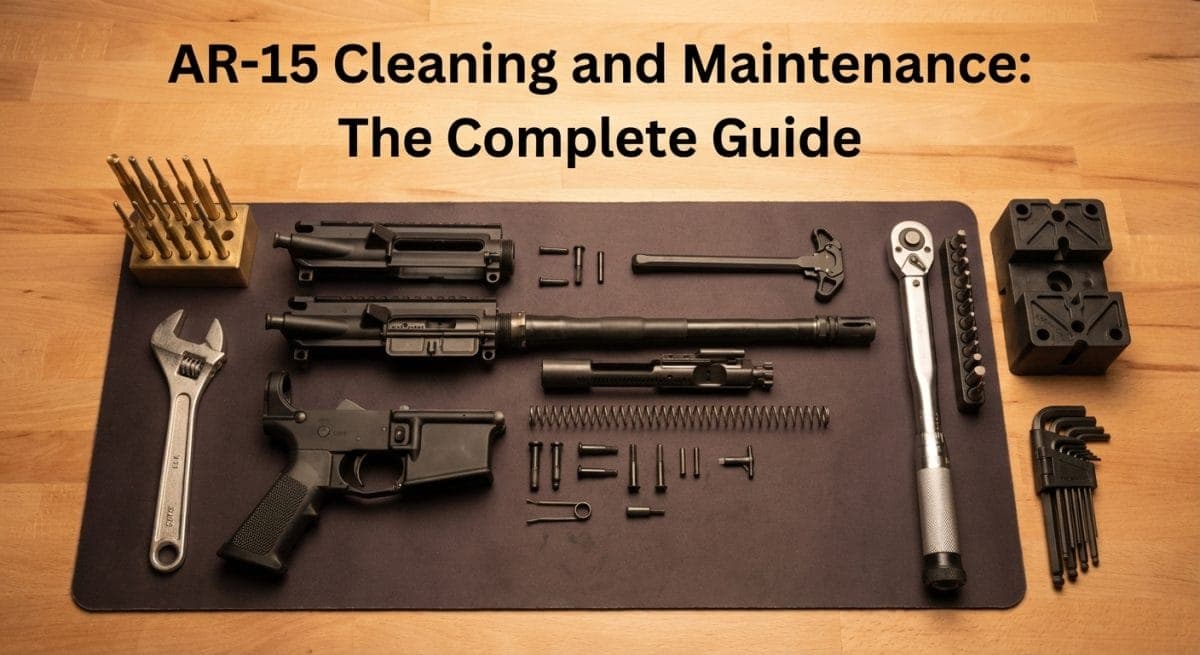
AR-15 Cleaning and Maintenance: The Complete Guide
By AR-15 Outfitters · April 9, 2026
AR15 Outfitters may earn a commission on purchases made through links in this article. This does not affect pricing or our recommendations.
Proper cleaning and maintenance of your AR-15 rifle ensures reliable performance, extends component life, and maintains accuracy. Whether you’re a new AR15 owner or an experienced shooter, establishing a consistent maintenance routine will keep your rifle functioning at its best. This comprehensive ar-15 cleaning maintenance guide covers everything from basic field stripping to advanced preventive care.
Essential Cleaning Supplies for AR-15 Maintenance
Before beginning any cleaning process, gather the proper supplies. Quality cleaning tools make the job faster and more effective while protecting your rifle’s finish and components.
Basic Cleaning Kit Components
- Cleaning Rod: A one-piece rod or quality multi-section rod in .22 caliber (5.56mm). Carbon fiber or coated steel rods prevent bore damage better than bare aluminum.
- Bore Brush: Bronze bore brushes in .22 caliber work well for most cleaning. Nylon brushes offer gentler cleaning for regular maintenance.
- Chamber Brush: A dedicated 5.56mm chamber brush removes carbon buildup from the chamber and locking lug area.
- Patches: Cotton patches in 1.5″ to 2″ sizes. Plan on using 20-30 patches per cleaning session.
- Patch Jag: A pointed jag provides better patch-to-bore contact than loop-style attachments.
- Solvent: CLP (Cleaner, Lubricant, Protectant) products work for general cleaning. Dedicated copper solvents help with heavy fouling.
- Lubricant: A quality gun oil or grease. Many shooters prefer separate lubricants over all-in-one CLPs for better protection.
- Cleaning Mat: Protects surfaces and provides organization for small parts.
- Toothbrush or Nylon Brushes: For scrubbing the bolt carrier group and other components.
- Cotton Swabs: Useful for detail cleaning in tight spaces.
- Microfiber Cloths: For wiping down parts and removing excess oil.
Field Stripping Your AR-15
Field stripping breaks down your AR15 into its major components for cleaning. This process takes about 2-3 minutes with practice.
Safety First
Before any disassembly:
- Point the rifle in a safe direction
- Remove the magazine
- Lock the bolt back and visually inspect the chamber
- Let the bolt forward on an empty chamber
- Point in a safe direction and pull the trigger to release spring tension
Disassembly Steps
- Push the rear takedown pin: Located above the pistol grip, push it from left to right until it stops (it typically won’t come all the way out).
- Pivot the upper receiver: The upper will hinge open on the front pivot pin.
- Remove the bolt carrier group: Pull the charging handle back about 3 inches, then remove both the charging handle and BCG together.
- Push the front pivot pin: This allows complete separation of upper and lower receivers if needed.
- Remove the buffer and spring (optional): Press the buffer retainer down and ease the buffer and spring out of the buffer tube.
Cleaning the Barrel
The barrel requires the most attention during cleaning, as copper and carbon fouling directly impact accuracy. A properly maintained barrel typically shows 0.5-1 MOA better accuracy than a fouled one.
Bore Cleaning Process
- Initial solvent application: Run a patch soaked in bore solvent through the barrel from chamber to muzzle. Let it soak for 5-10 minutes.
- Brush the bore: Make 10-20 passes with a bronze bore brush, always going completely through before reversing direction. Add solvent every 5 passes.
- Patch until clean: Run wet patches through until they show minimal fouling, then follow with dry patches until they come out clean.
- Check with a bore light: Inspect the bore for remaining fouling or copper streaks.
- Clean the chamber: Use a chamber brush with solvent, rotating it 10-15 times. Follow with patches on a cleaning rod.
- Final protection: Run a patch with light oil through the bore, then a dry patch to remove excess.
For precision shooters, tracking round count helps identify when accuracy degrades. Most quality barrels maintain peak accuracy for 150-300 rounds before requiring cleaning, though this varies with ammunition and barrel quality.
Bolt Carrier Group Cleaning
The BCG receives the most carbon fouling and requires thorough cleaning for reliable function. Carbon buildup on the bolt tail and gas rings commonly causes short-stroking and extraction issues.
Disassembling the BCG
- Remove the firing pin retainer: Use a punch or firing pin to push out the cotter pin.
- Remove the firing pin: It slides out the rear of the carrier.
- Push out the cam pin: Rotate the bolt to align the cam pin hole, then push the pin out.
- Remove the bolt: Pull it straight out of the carrier.
Cleaning Each Component
Bolt cleaning: Focus on the bolt face, locking lugs, and gas rings. Use a brass brush or pick to remove carbon from the extractor area. Carbon buildup here often measures 0.001-0.003 inches thick after 500-1000 rounds.
Carrier cleaning: Scrub the interior where the bolt rides and the gas key area. The tail where gas vents accumulate heavy carbon: expect 1/16 inch buildup after 2000 rounds without cleaning.
Gas rings check: Stand the bolt on its face. If it supports its own weight, the gas rings maintain adequate tension. Rings typically last 3000-5000 rounds.
Reassembly: Reverse the disassembly process. Ensure the cam pin is properly seated and the firing pin moves freely.
Upper and Lower Receiver Cleaning
Receivers accumulate less fouling but still need attention for smooth operation.
Upper Receiver
- Wipe down the interior with solvent-soaked patches
- Clean the barrel extension area where the bolt locks
- Remove carbon from the gas tube entrance (visible inside the upper)
- Clean the charging handle channel
Lower Receiver
- Clean the trigger group area with cotton swabs and solvent
- Wipe out the magazine well
- Use compressed air to blow out debris from the trigger group (if not disassembling)
- Check the buffer retainer and spring for damage
Proper Lubrication Points
Correct lubrication prevents wear and ensures reliable cycling. Too much oil attracts debris, while too little increases friction and wear.
Key Lubrication Points
- Bolt lugs: A drop of oil on each lug (8 total drops)
- Cam pin: One drop where it contacts the bolt
- Firing pin: Light coat, wipe off excess
- Bolt carrier rails: Light coat on the rails that contact the upper receiver
- Gas rings: Light oil coat for movement
- Buffer spring: Light grease on the spring reduces noise
- Charging handle: Drop of oil on each side where it contacts the upper
In typical conditions, apply approximately 0.5-1ml total oil to all components. Desert or dusty conditions may require lighter lubrication to prevent attracting debris.
Maintenance Schedule
A structured maintenance schedule prevents problems before they affect reliability. Adjust based on your shooting volume and conditions.
After Every Range Session
- Wipe down the bolt and carrier
- Run a boresnake or quick patches through the barrel
- Re-lubricate the BCG
- Check for loose components
Every 500 Rounds
- Full BCG disassembly and cleaning
- Thorough barrel cleaning with bronze brush
- Clean gas tube with pipe cleaners if accessible
- Inspect gas rings for wear
- Check trigger group function
Every 1000-2000 Rounds
- Deep clean all components
- Remove handguard and inspect gas block
- Check barrel nut torque (30-80 ft-lbs depending on type)
- Inspect buffer spring (free length should be 11.75-12.75 inches)
- Replace gas rings if needed
- Check headspace with gauges (1.4636 minimum, 1.4706 maximum)
Preventing Carbon Buildup and Corrosion
Preventive maintenance reduces cleaning time and extends component life. Quality parts and coatings make a significant difference in maintenance requirements.
Carbon Buildup Prevention
- Use quality ammunition: Clean-burning powders reduce fouling by 30-40% compared to cheap ammunition
- Maintain proper gas system timing: Over-gassed rifles blow more carbon into the action
- Regular cleaning: Carbon bonds stronger over time. Fresh carbon removes easier than week-old deposits
- Consider suppressor-optimized parts: If running suppressed, enhanced gas tubes and carriers handle increased fouling better
Corrosion Prevention
- Store properly: 30-50% humidity prevents rust while avoiding wood stock issues
- Use corrosion inhibitors: Light coat of oil or dedicated protectants for long-term storage
- Address moisture immediately: Dry thoroughly after exposure to rain or humidity
- Check hidden areas: Under handguards and in the buffer tube commonly develop rust first
Advanced Coatings
Modern BCG coatings significantly reduce cleaning time and effort:
- Nickel Boron (NiB): Reduces friction coefficient to 0.03-0.05 (compared to 0.15 for phosphate). Carbon typically wipes off with just a cloth.
- Diamond-Like Carbon (DLC): Even lower friction at 0.02-0.03. Extremely durable with 90+ Rockwell hardness.
- Titanium Nitride (TiN): Good lubricity with 85 Rockwell hardness. The gold color shows wear patterns clearly.
- Chrome: Traditional military coating. Harder than phosphate but requires more cleaning effort than modern coatings.
These coatings typically reduce cleaning time by 50-70% and may extend cleaning intervals by 2-3x under normal conditions.
Recommended Parts
Building an AR-15 with quality components reduces maintenance requirements and improves reliability. When selecting parts for your build, consider how different coatings and materials affect long-term maintenance needs.
The AR15 Outfitters Builder helps you compare BCGs with different coatings, barrel treatments, and other components that impact maintenance requirements. The builder shows real-time pricing across multiple vendors, making it easy to find quality parts within your budget.
Key components to consider for easier maintenance:
- BCGs with advanced coatings (NiB, DLC, or TiN)
- Melonite/Nitride treated barrels for corrosion resistance
- Adjustable gas blocks for tuning gas flow and reducing fouling
- Quality triggers with sealed designs to prevent debris ingress
Regular cleaning and maintenance keep your AR-15 running reliably for thousands of rounds. By following this ar-15 cleaning maintenance guide and establishing consistent habits, you’ll prevent most common issues before they affect your rifle’s performance. Remember that quality parts and proper technique matter more than expensive cleaning supplies: a well-maintained AR15 with standard components will outperform a neglected rifle with premium parts every time.
Disclaimer: AR15 Outfitters does not sell firearms. This site is an information and affiliate resource only. All purchases are completed through licensed retailers. Always comply with all federal, state, and local laws when building or purchasing firearms and firearm components.
More Articles
AR-15 Failure to Eject: Causes and Fixes. Find the best parts and prices on the AR15 Outfitters builder.
AR-15 Failure to Feed: Causes and FixesAR-15 Failure to Feed: Causes and Fixes. Find the best parts and prices on the AR15 Outfitters builder.
AR-15 Double Feed: How to Clear and PreventAR-15 Double Feed: How to Clear and Prevent. Find the best parts and prices on the AR15 Outfitters builder.