
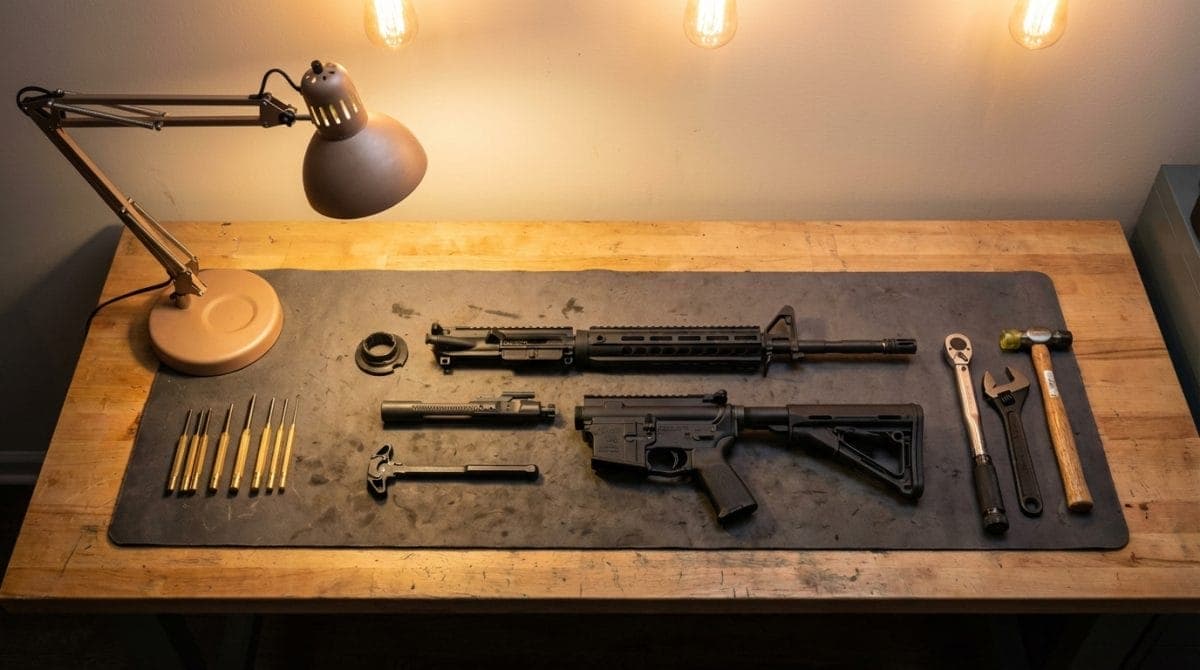
AR-15 Failure to Feed: Causes and Fixes
By AR-15 Outfitters · April 10, 2026
AR15 Outfitters may earn a commission on purchases made through links in this article. This does not affect pricing or our recommendations.
When your AR-15 experiences a failure to feed malfunction, the rifle stops functioning at the worst possible moment. Understanding why these malfunctions occur and how to diagnose them systematically transforms a frustrating range day into a learning opportunity. Most AR-15 failure to feed issues stem from one of five primary systems: magazines, ammunition, gas system operation, bolt carrier group components, or buffer system timing.
Understanding Failure to Feed Malfunctions
A failure to feed occurs when a cartridge fails to properly chamber from the magazine into the barrel. You’ll typically recognize this malfunction when you pull the trigger and hear a click instead of a bang, or when the bolt carrier group stops short of battery position. The bolt may be partially open with a round wedged at an angle between the bolt face and chamber, or completely closed on an empty chamber despite rounds remaining in the mag.
Before diving into complex diagnostics, perform immediate action drills. The military’s “tap, rack, and reassess” procedure clears approximately 85% of feed malfunctions: tap the magazine firmly upward to ensure it’s seated, rack the charging handle fully to eject any obstruction and chamber a fresh round, then reassess your target. If this doesn’t resolve the issue, systematic troubleshooting begins.
Magazine-Related Causes and Solutions
Magazine issues cause roughly 60% of AR-15 failure to feed malfunctions. Start your diagnosis here before exploring more complex systems.
Worn or Damaged Magazine Springs
Magazine springs lose tension over time, particularly when stored loaded. A spring that’s lost 15% or more of its original tension may not push rounds up fast enough during the rapid cycling of automatic fire. Test spring tension by loading 28 rounds in a 30-round magazine. If you can easily compress the rounds further or the top round sits noticeably below the feed lips, replace the spring. Quality springs like Wolff Extra Power magazine springs typically maintain proper tension for 5,000 to 10,000 cycles when not stored compressed.
Bent or Damaged Feed Lips
Feed lips control cartridge presentation angle. Even a 0.010″ deviation can cause feeding issues. Inspect feed lips with calipers: proper spacing measures 0.450″ to 0.454″ at the front and 0.476″ to 0.480″ at the rear for standard USGI-pattern mags. Polymer magazines like PMAGs eliminate bent feed lip concerns but can crack under extreme conditions. Steel and aluminum magazines bend rather than break but require periodic inspection.
Magazine Compatibility Issues
Not all AR-15 magazines work reliably in every rifle. Some manufacturers use tighter magwell dimensions or different feed ramp geometries. Test multiple magazine brands if problems persist. Generally, USGI-specification aluminum magazines, Magpul PMAGs, and Lancer L5AWM magazines demonstrate the widest compatibility across different manufacturers.
Ammunition-Related Failures
Ammunition accounts for approximately 20% of feeding failures, with issues ranging from dimensional problems to powder charge inconsistencies.
Out-of-Spec Ammunition
SAAMI specifications allow maximum cartridge overall length (COAL) of 2.260″ for .223 Remington. However, some handloads or bulk ammunition may exceed this length, causing rounds to jam against the chamber throat. Measure problematic rounds with calipers. Similarly, case rim thickness should measure 0.045″ to 0.049″. Thicker rims prevent proper bolt engagement.
Underpowered Loads
Insufficient powder charges create short stroke conditions where the bcg doesn’t travel far enough rearward to pick up the next round. Steel-cased ammunition typically generates 10-15% less pressure than brass-cased loads, sometimes falling below the 52,000 PSI needed for reliable cycling in standard gas systems. If malfunctions occur only with specific ammunition, chronograph the loads. Velocities more than 200 fps below standard indicate pressure issues.
Gas System Malfunctions
The gas system drives your AR’s operating cycle. When insufficient gas pressure reaches the bolt carrier, the rifle experiences short stroking, leading to failure to feed.
Gas Block Alignment
Misaligned gas blocks represent the most common gas issue. The gas port must align within 0.005″ of the barrel’s gas port for optimal function. Check gas block alignment by removing the handguard and visually inspecting through the gas tube opening. Low-profile gas blocks under free-float handguards particularly prone to shifting during installation. Properly torque gas block screws to 30-35 inch-pounds and consider using Rocksett or similar thread locker.
Gas Tube Obstruction or Damage
Carbon buildup inside the gas tube gradually restricts gas flow. After 5,000 to 7,000 rounds, carbon deposits can reduce gas flow by up to 30%. Inspect the gas tube by shining a light through one end. Clean with specialized gas tube brushes and solvent. Bent or kinked gas tubes require replacement. The gas tube should slide freely into the gas key without binding.
Gas Port Sizing Issues
Barrel manufacturers drill gas ports to different sizes based on barrel length and intended use. A 16″ mid-length gas system typically uses a 0.0625″ to 0.078″ gas port, while a carbine-length system on the same barrel length needs 0.063″ to 0.070″. Undersized ports cause short stroking. Oversized ports create violent cycling and premature wear. Professional gunsmiths can measure and potentially enlarge undersized ports.
Bolt Carrier Group Problems
The bolt carrier group contains multiple failure points that affect feeding reliability.
Worn or Missing Gas Rings
Gas rings seal pressure behind the bolt to drive the carrier rearward. Check gas rings by standing the bcg bolt-up on a flat surface. If it collapses under its own weight, replace the rings. Properly functioning rings support the carrier’s 11.5-ounce weight. Most bolts use three rings with gaps staggered 120 degrees apart. Rings typically require replacement every 5,000 to 15,000 rounds depending on firing schedule and ammunition type.
Carbon Buildup on Bolt Face
Excessive carbon on the bolt face prevents proper cartridge seating. The rim must seat flush against the bolt face for reliable extraction and feeding of subsequent rounds. Clean the bolt face and extractor channel every 500 to 1,000 rounds. Pay particular attention to the ejector hole, where compressed carbon can prevent full ejector extension.
Damaged or Weak Extractor Spring
The extractor must maintain 4 to 6 pounds of tension to reliably grip cartridge rims. Weak springs cause sporadic extraction, leaving spent cases in the chamber and preventing fresh rounds from feeding. Test extractor tension with a case rim gauge or by attempting to slip a loaded round under the extractor. Properly tensioned extractors require deliberate force to insert a round.
Buffer System Timing Issues
The buffer and buffer spring control bolt carrier velocity and dwell time, directly affecting feeding reliability.
Incorrect Buffer Weight
Standard carbine buffers weigh 3.0 ounces, while H, H2, and H3 buffers weigh 3.8, 4.6, and 5.4 ounces respectively. Overly light buffers in overgassed systems create bolt bounce, where the carrier rebounds off the barrel extension before stripping the next round. Excessively heavy buffers cause short stroking. Match buffer weight to your gas system length and barrel length according to manufacturer recommendations.
Worn Buffer Spring
Buffer springs lose approximately 1″ of free length per 5,000 rounds fired. New carbine springs measure 10.5″ to 11.25″ uncompressed. Springs shorter than 10″ typically require replacement. Weak springs reduce bolt velocity and dwell time, potentially causing failures to strip rounds from magazines. High-quality springs like Sprinco or Tubbs flatwire springs maintain consistent pressure longer than standard springs.
Systematic Diagnostic Procedure
Follow this systematic approach when troubleshooting persistent failure to feed issues:
- Isolate Variables: Test with different magazines and ammunition types first. If problems persist across multiple mags and ammo brands, investigate mechanical issues.
- Check Easy Items First: Inspect magazine feed lips, clean the chamber and bolt face, verify proper lubrication.
- Examine Gas System: Remove handguard and check gas block alignment. Ensure gas tube moves freely in gas key.
- Inspect BCG Components: Test gas rings, measure extractor tension, check for unusual wear patterns.
- Evaluate Buffer System: Measure spring length, verify correct buffer weight for your configuration.
- Pattern Analysis: Note whether failures occur on first round, last round, or randomly. First-round issues often indicate magazine problems; last-round failures suggest weak magazine springs; random failures point to gas or bcg issues.
Comparison Table: Common Causes and Solutions
| Component | Failure Rate | Diagnosis Method | Solution | Cost | Difficulty |
|---|---|---|---|---|---|
| Magazine Springs | 35% | Load 28 rounds, test compression | Replace spring or magazine | $5-45 | Easy |
| Feed Lips | 25% | Measure with calipers | Adjust or replace magazine | $15-45 | Easy |
| Gas Block | 15% | Visual alignment check | Realign and torque properly | $0-75 | Moderate |
| Gas Rings | 10% | Stand test | Replace rings | $5-10 | Easy |
| Buffer Spring | 8% | Measure free length | Replace spring | $15-45 | Easy |
| Ammunition | 5% | Test multiple brands | Change ammo brand/type | Varies | Easy |
| Other | 2% | Professional inspection | Varies | Varies | Hard |
Preventive Maintenance Schedule
Regular maintenance prevents most feeding failures:
- Every 500 rounds: Clean bolt face, lubricate bcg, wipe down magazine internals
- Every 2,000 rounds: Deep clean gas tube, inspect extractor spring, check gas rings
- Every 5,000 rounds: Replace gas rings, measure buffer spring, inspect feed lips on all magazines
- Every 10,000 rounds: Consider replacing buffer spring, extractor spring, and magazine springs
Recommended Parts for Reliable Feeding
Building or upgrading your AR-15 with quality components significantly reduces feeding issues. Start your build with proven components using the AR15 Outfitters Builder to ensure compatibility and find the best prices on reliable parts.
For magazines, invest in Magpul PMAGs or Okay Industries SureFeed magazines, which demonstrate consistent feeding across thousands of rounds. When selecting a bolt carrier group, choose reputable manufacturers like BCM, Daniel Defense, or Aero Precision who properly stake gas keys and use quality gas rings. The builder tool helps compare BCG options and prices across multiple retailers.
Buffer system selection depends on your barrel and gas system length. Use the configurator to match appropriate buffer weights and spring rates to your specific build. Generally, 16″ mid-length barrels function well with standard or H buffers, while shorter barrels often benefit from heavier H2 buffers to control bolt velocity.
Quality control matters most in gas blocks and gas tubes. Adjustable gas blocks from Superlative Arms or SLR Rifleworks allow fine-tuning gas pressure to optimize feeding with different ammunition types. The builder ensures you select the correct gas tube length for your barrel’s gas system, preventing costly ordering errors.
Remember that component compatibility affects feeding reliability as much as individual part quality. The AR15 Outfitters builder automatically checks compatibility between parts, preventing common mistakes like mismatched buffer tubes and stocks or incorrect gas system lengths. This systematic approach to parts selection, combined with proper maintenance and troubleshooting knowledge, virtually eliminates failure to feed malfunctions in properly assembled AR-15s.
Disclaimer: AR15 Outfitters does not sell firearms. This site is an information and affiliate resource only. All purchases are completed through licensed retailers. Always comply with all federal, state, and local laws when building or purchasing firearms and firearm components.
More Articles
AR-15 Failure to Eject: Causes and Fixes. Find the best parts and prices on the AR15 Outfitters builder.
AR-15 Double Feed: How to Clear and PreventAR-15 Double Feed: How to Clear and Prevent. Find the best parts and prices on the AR15 Outfitters builder.
AR-15 Short Stroking: Causes and FixesAR-15 Short Stroking: Causes and Fixes. Find the best parts and prices on the AR15 Outfitters builder.