
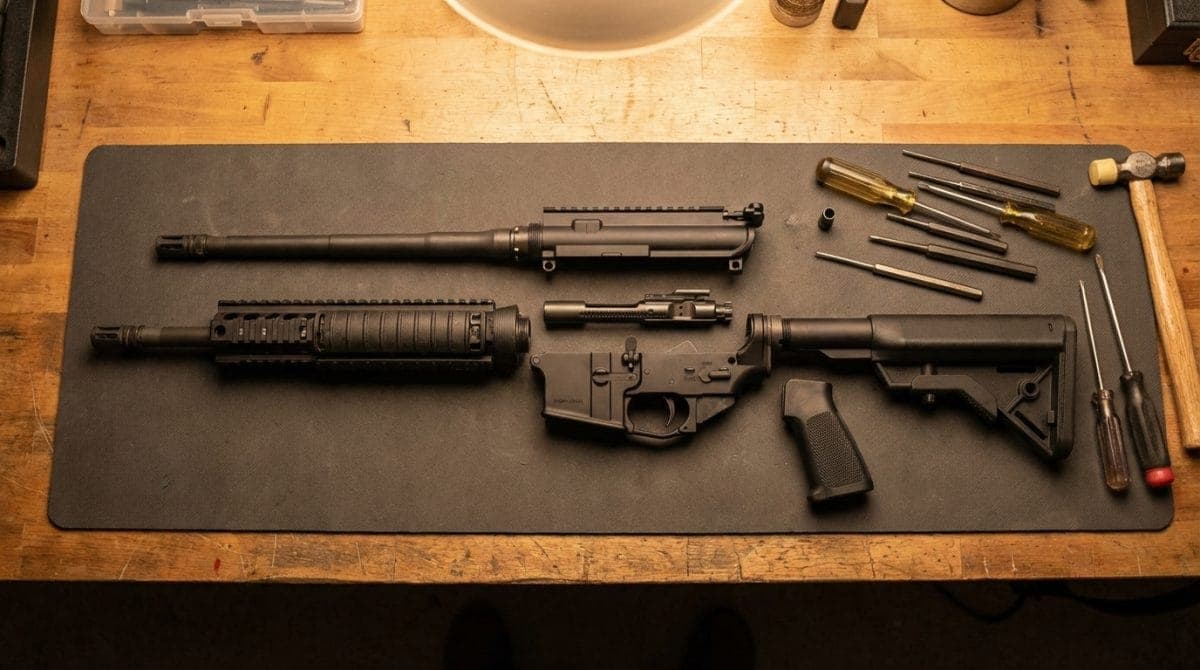
AR-15 Failure to Eject: Causes and Fixes
By AR-15 Outfitters · April 10, 2026
AR15 Outfitters may earn a commission on purchases made through links in this article. This does not affect pricing or our recommendations.
When your AR-15 experiences a failure to eject (FTE), it can turn a good range day into a frustrating troubleshooting session. Understanding the root causes and systematic fixes for these malfunctions will help you diagnose and resolve issues quickly, getting you back to shooting reliably.
Understanding AR-15 Failure to Eject vs. Failure to Extract
Before diving into troubleshooting, it’s important to distinguish between two commonly confused malfunctions:
- Failure to Extract: The spent case remains fully seated in the chamber after firing. The extractor fails to grip or pull the case from the chamber.
- Failure to Eject: The spent case is pulled from the chamber but doesn’t clear the ejection port. This often results in a “stovepipe” jam or the case becoming trapped between the BCG and charging handle.
While these malfunctions share some causes, proper diagnosis requires understanding which one you’re experiencing.
Common Causes of AR-15 Failure to Eject
1. Gas System Issues
Insufficient gas pressure accounts for approximately 60% of FTE malfunctions in AR-15s. When your gas system doesn’t deliver adequate pressure to cycle the BCG, ejection suffers.
Symptoms:
- Weak or erratic ejection patterns
- Cases dribbling out at 5 o’clock position
- BCG not traveling full stroke (check witness marks on buffer)
Common gas block problems:
- Misaligned gas block (should be centered over gas port within 0.005″)
- Loose set screws (torque to 35-40 in-lbs typically)
- Carbon buildup in gas tube or port
- Undersized gas port (rifle-length systems need 0.093-0.096″ typically)
2. Ejector Problems
The ejector spring provides the force to kick spent cases clear of the ejection port. Weak or damaged ejector components cause approximately 25% of FTE issues.
Ejector specifications:
- Spring force: 4.5-5.5 lbs compressed
- Ejector protrusion: 0.085-0.095″ from bolt face
- Spring free length: 0.430-0.440″ (standard carbine)
3. Extractor Issues
While primarily associated with failure to extract, a weak extractor can cause FTE when it loses grip during the ejection cycle.
Extractor diagnostics:
- Spring tension: 5-7 lbs at full compression
- O-ring durometer: 70-90 Shore A
- Extractor hook engagement: minimum 0.020″ on case rim
4. Buffer System Mismatch
Using the wrong buffer weight affects BCG velocity and dwell time, impacting ejection reliability.
| Gas System Length | Typical Buffer Weight | BCG Velocity (fps) |
|---|---|---|
| Pistol (4″) | Standard (3.0 oz) | 18-22 |
| Carbine (7″) | H (3.8 oz) | 16-20 |
| Mid-length (9″) | H or H2 (4.6 oz) | 14-18 |
| Rifle (12″) | H2 or H3 (5.4 oz) | 12-16 |
Systematic Troubleshooting Process
Step 1: Immediate Action Drill
When experiencing any AR malfunction, perform the immediate action drill: Tap, Rack, and Reassess.
- Tap: Firmly tap the magazine to ensure proper seating
- Rack: Pull the charging handle fully rearward and release
- Reassess: Attempt to fire; if malfunction persists, proceed to diagnosis
Step 2: Visual Inspection
After clearing the malfunction:
- Note the position of the stuck case (stovepipe at 12 o’clock indicates weak ejection)
- Check the case rim for extractor marks or damage
- Observe next round position (double-feed indicates timing issue)
Step 3: Component Testing
Test the ejector:
- Remove BCG and depress ejector with punch
- Should have firm spring resistance throughout travel
- Should return smartly when released
Check the gas system:
- Remove handguard and inspect gas block alignment
- Verify gas tube isn’t bent or obstructed
- Blow compressed air through gas tube (should flow freely)
Verify buffer spring:
- Free length: 11.75-12.5″ for carbine
- No visible coil binding or kinks
- Consistent coil spacing
Solutions and Fixes
For Gas System Issues
Adjustable gas blocks offer tuning flexibility:
- Start fully open, then close 1/2 turn at a time
- Tune for consistent 3-4 o’clock ejection pattern
- Mark optimal setting with witness marks
Fixed gas block solutions:
- Verify proper barrel journal diameter (0.750″ typically)
- Use proper torque (35-40 in-lbs for set screws)
- Consider dimpling barrel for positive retention
For Ejector Problems
Upgrade options:
- Enhanced ejector springs (Sprinco 5-coil provides 15% more force)
- Viton O-rings for high-temperature resistance
- Tool steel ejectors for high-volume shooters
For Extractor Issues
Enhancement options:
- Dual extractor springs (BCM or Sprinco)
- D-fender rings for additional tension
- Enhanced extractors with optimized hook geometry
Magazine Considerations
Don’t overlook mags as a potential cause. Weak magazine springs or damaged feed lips can cause timing issues leading to FTE:
- Test with known-good magazines (Magpul PMAG or Okay Surefeed)
- Verify proper follower tilt (should present rounds at 7-degree angle)
- Check feed lip spacing (0.454-0.458″ for standard mags)
When to Swap Major Components
Consider replacing components when:
- Ejector spring shows less than 4 lbs force
- Extractor fails to hold a loaded round against gravity
- Gas port erosion exceeds 0.010″ over spec
- BCG gas rings show more than 0.005″ gap when staggered
Recommended Parts
For builders experiencing persistent FTE issues, consider these proven solutions available through the AR15 Outfitters builder:
- BCG Upgrades: Look for enhanced bolt designs with improved ejector and extractor springs. Toolcraft and BCM offer reliable options with proper heat treatment and testing.
- Gas System Components: Adjustable gas blocks from Superlative Arms or SLR Rifleworks provide fine-tuning capability for problem builds.
- Buffer Systems: Vltor A5 system offers intermediate length for improved timing, while JP Silent Captured Springs eliminate spring binding issues.
- Quality Magazines: Stick with proven designs. Magpul Gen M3 PMAGs and Okay Industries Surefeed magazines show consistent performance across thousands of rounds.
When building or troubleshooting your AR, use the AR15 Outfitters builder to ensure component compatibility and find the best prices on quality parts. Proper parts selection prevents many FTE issues before they start.
Disclaimer: AR15 Outfitters does not sell firearms. This site is an information and affiliate resource only. All purchases are completed through licensed retailers. Always comply with all federal, state, and local laws when building or purchasing firearms and firearm components.
More Articles
AR-15 Failure to Feed: Causes and Fixes. Find the best parts and prices on the AR15 Outfitters builder.
AR-15 Double Feed: How to Clear and PreventAR-15 Double Feed: How to Clear and Prevent. Find the best parts and prices on the AR15 Outfitters builder.
AR-15 Short Stroking: Causes and FixesAR-15 Short Stroking: Causes and Fixes. Find the best parts and prices on the AR15 Outfitters builder.