
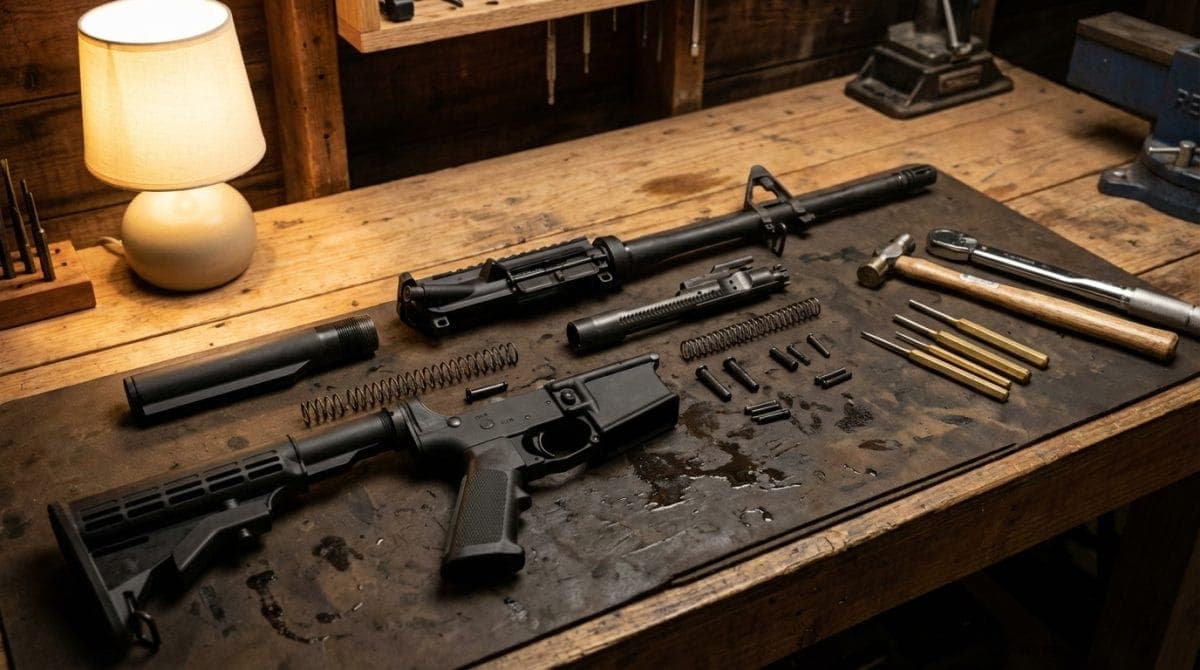
AR-15 Parts Interchangeability: What Swaps Between Brands?
By AR-15 Outfitters · April 10, 2026
AR15 Outfitters may earn a commission on purchases made through links in this article. This does not affect pricing or our recommendations.
Building an AR-15 offers unmatched flexibility, but understanding AR-15 parts interchangeability compatibility brands can feel overwhelming. Whether you’re assembling your first rifle or upgrading an existing build, knowing which components work together across different manufacturers is essential for both safety and performance.
The AR platform revolutionized firearms design through its modular construction, allowing builders to mix and match parts from dozens of manufacturers. This modularity stems from military specifications (mil-spec) established for the M16/M4 family, creating a baseline standard that most commercial manufacturers follow. However, not all parts are created equal, and understanding compatibility between brands can mean the difference between a reliable rifle and an expensive paperweight.
Understanding Mil-Spec: The Foundation of AR Compatibility
The term “mil-spec” gets thrown around frequently in AR discussions, but what does it actually mean for parts interchangeability? Military specifications define precise tolerances, materials, and testing procedures for components. For example, a mil-spec buffer tube has an outside diameter of 1.17″ to 1.19″ and uses 6-position indexing with 3/4″ spacing between positions.
Most reputable manufacturers design their AR-15 lower and upper receiver components to these specifications, ensuring basic compatibility. However, some brands intentionally deviate from mil-spec for performance improvements or proprietary features. Understanding these deviations helps you make informed decisions when selecting parts.
Upper and Lower Receiver Compatibility
The connection between upper and lower receivers represents the most fundamental compatibility point in the AR-15 platform. Mil-spec receivers use standardized pivot and takedown pin holes: 0.250″ diameter for the pivot pin and 0.250″ for the takedown pin, with center-to-center spacing of 7.004″ to 7.009″.
Most major manufacturers maintain these specifications:
- Aero Precision uppers typically pair with Anderson, PSA, and BCM lowers without issues
- Daniel Defense receivers work with Noveske, LWRC, and Knights Armament components
- Budget brands like Anderson and PSA maintain compatibility with premium receivers from LMT or Radian
However, some manufacturers use proprietary designs. The AR-10 platform, for instance, lacks standardization: DPMS-pattern receivers won’t mate with Armalite AR-10 components. Even within the AR-15 world, billet receiver sets from companies like Radian or ADM often feature matched upper/lower sets with tighter tolerances that may not play well with other brands.
Common Compatibility Issues
Receiver fit issues typically manifest as:
- Excessive play between upper and lower (0.003″ to 0.008″ gap is normal)
- Difficulty inserting takedown pins (forcing pins can damage receivers)
- Misalignment preventing pin insertion entirely
Barrel and Handguard Interchangeability
Barrel installation requires matching several specifications between the barrel extension and upper receiver. Standard AR-15 barrel extensions measure 1.000″ in diameter with M4 feed ramps cut at specific angles. Most barrels from major manufacturers like Criterion, Faxon, and BA use identical extension specifications.
Handguard mounting systems vary significantly:
- Standard barrel nuts: Delta rings and mil-spec nuts work across brands
- Free-float systems: Often proprietary to the handguard manufacturer
- Enhanced uppers: Aero M4E1, BCM MK2, and similar designs require matching handguards
Gas block journals come in three standard sizes: 0.625″ (pencil barrels), 0.750″ (most common), and 0.875″ (heavy barrels). Always verify journal diameter before purchasing gas blocks.
Bolt Carrier Group Compatibility Across Calibers
The bolt carrier group represents one area where calibre changes demand attention. Standard 5.56/.223 BCGs share dimensions across manufacturers, with bolt lugs measuring 0.384″ and carrier keys using identical screw patterns. You can typically swap BCGs between brands without issues.
However, alternative calibers require specific bolts:
| Caliber | Bolt Face Diameter | Carrier Compatibility | Special Requirements |
|---|---|---|---|
| 5.56/.223 | 0.378″ | Standard | None |
| .300 Blackout | 0.378″ | Standard | Uses 5.56 bolt |
| 6.5 Grendel | 0.441″ | Standard | Enhanced bolt recommended |
| .458 SOCOM | 0.531″ | Modified | Enlarged ejection port |
| 9mm | N/A | Blowback specific | Dedicated 9mm BCG |
Fire Control Group and Lower Parts Compatibility
The fire control group (trigger assembly) maintains excellent compatibility across brands. Standard mil-spec triggers use 0.154″ diameter pins with 0.920″ center spacing. This specification allows triggers from Geissele, Timney, CMC, and others to drop into any standard AR-15 lower receiver.
Some considerations for trigger compatibility:
- Cassette triggers (CMC, Timney) simplify installation but may not fit all lower receivers
- Two-stage triggers typically require standard mil-spec pin sizes
- Some precision lowers use 0.169″ “large pin” holes, requiring specific triggers
- Anti-rotation pins can interfere with some trigger designs
Safety Selector and Grip Compatibility
Safety selectors use standardized dimensions across the industry. The selector detent hole measures 0.125″ in diameter, allowing aftermarket safeties from Radian, Battle Arms, and others to function in any mil-spec lower.
Pistol grips mount using a standard 1/4-28 thread bolt into the lower receiver. This uniformity means grips from Magpul, BCM, Ergo, and dozens of other manufacturers interchange freely. The only variation involves grip angle and whether the grip includes storage compartments.
Buffer System Interchangeability
The buffer system demonstrates how standardization enables mixing components. Buffer tubes come in two main varieties:
- Carbine tubes: 7.17″ to 7.20″ long with 6 positions
- Rifle tubes: 9.5″ to 9.6″ long, smooth exterior
Within these categories, tubes from different manufacturers typically interchange. However, buffer weights vary significantly:
- Carbine buffer: 2.9 oz to 3.0 oz
- Heavy (H) buffer: 3.8 oz to 4.0 oz
- H2 buffer: 4.6 oz to 4.7 oz
- H3 buffer: 5.4 oz to 5.6 oz
Spring rates also affect function. Standard carbine springs provide 17 to 19 pounds of force, while enhanced springs from Sprinco or DPM Systems offer different force curves for tuning.
Magazine Compatibility Considerations
AR-15 magazines maintain broad compatibility thanks to STANAG specifications. The magazine well on standard lower receivers measures 2.32″ long by 0.86″ wide, accommodating magazines from:
- Magpul (PMAG Gen 2, Gen 3, and variants)
- Lancer Systems (L5AWM series)
- USGI-pattern aluminum magazines
- Daniel Defense, BCM, and other OEM magazines
Some compatibility notes:
- Gen 3 PMAGs may bind in some billet lowers with tight magwells
- HK416 magazines work but may not drop free in all lowers
- Drum magazines often require specific lower receiver clearance
Common Brand-Specific Compatibility Issues
While most AR parts maintain compatibility, certain manufacturers have quirks:
Proprietary Systems to Watch
LWRC: Uses proprietary barrel nut systems and enhanced bolt designs. Their uppers typically require LWRC-specific handguards.
Seekins Precision: Billet receivers may have tighter tolerances. Some users report standard upper receivers fitting too tightly on Seekins lowers.
POF-USA: Their E2 extraction system uses proprietary cam pins and bolts that won’t interchange with standard BCGs.
SIG MCX/MPX: Despite AR-style controls, these platforms use proprietary operating systems incompatible with standard AR parts.
Practical Build Recommendations by Use Case
Budget-Conscious Builders
Maximize compatibility by sticking to mil-spec components:
- Anderson or Aero Precision receivers
- Standard carbine buffer systems
- Basic mil-spec triggers
- Free-float handguards with standard barrel nuts
Competition Shooters
Balance performance upgrades with reliability:
- Match billet receiver sets for tighter tolerances
- Adjustable gas blocks (0.750″ standard)
- Drop-in trigger units from established manufacturers
- Tuned buffer systems with adjustable weights
Duty/Defense Rifles
Prioritize proven compatibility:
- Forged receivers from BCM, Daniel Defense, or Colt
- Standard bolt carrier groups (avoid lightweight carriers)
- Mil-spec or enhanced triggers from ALG or Geissele
- H or H2 buffers for reliable function
Verifying Compatibility: A Step-by-Step Process
Before purchasing parts, verify compatibility through this process:
- Check specifications: Compare diameter, thread pitch, and pin sizes
- Research manufacturer notes: Many companies list compatible brands
- Consult build lists: Community forums document successful combinations
- Contact manufacturers: Most provide compatibility information
- Test fit when possible: Local shops may allow test fitting
Recommended Parts for Maximum Compatibility
When building your AR-15, selecting parts with proven cross-brand compatibility ensures a smooth assembly process. The AR15 Outfitters builder at https://ar15outfitters.com/builder helps you configure builds with compatible components from trusted manufacturers.
For maximum interchangeable options, consider these proven combinations:
- Receivers: Aero Precision M4E1 sets offer enhanced features while maintaining standard dimensions
- BCGs: Toolcraft or AO Precision OEM carriers work across all standard uppers
- Triggers: LaRue MBT-2S provides match performance in any mil-spec lower
- Buffer Systems: VLTOR A5 systems offer compatibility with both carbine and rifle springs
- Handguards: Midwest Industries rails include multiple mounting options
The ar15 platform’s strength lies in its standardization. By understanding which specifications matter for compatibility and recognizing where manufacturers deviate from standards, you can confidently mix components from different brands. Whether building a precision rifle or a duty weapon, proper parts selection ensures reliable function and optimal performance.
Remember that while most AR-15 parts maintain broad compatibility, always verify specific dimensions and requirements before purchasing. The modular nature of the platform provides endless customization options, but success depends on understanding how different manufacturers interpret and implement common standards.
Disclaimer: AR15 Outfitters does not sell firearms. This site is an information and affiliate resource only. All purchases are completed through licensed retailers. Always comply with all federal, state, and local laws when building or purchasing firearms and firearm components.
More Articles
AR-15 Failure to Eject: Causes and Fixes. Find the best parts and prices on the AR15 Outfitters builder.
AR-15 Failure to Feed: Causes and FixesAR-15 Failure to Feed: Causes and Fixes. Find the best parts and prices on the AR15 Outfitters builder.
AR-15 Double Feed: How to Clear and PreventAR-15 Double Feed: How to Clear and Prevent. Find the best parts and prices on the AR15 Outfitters builder.