
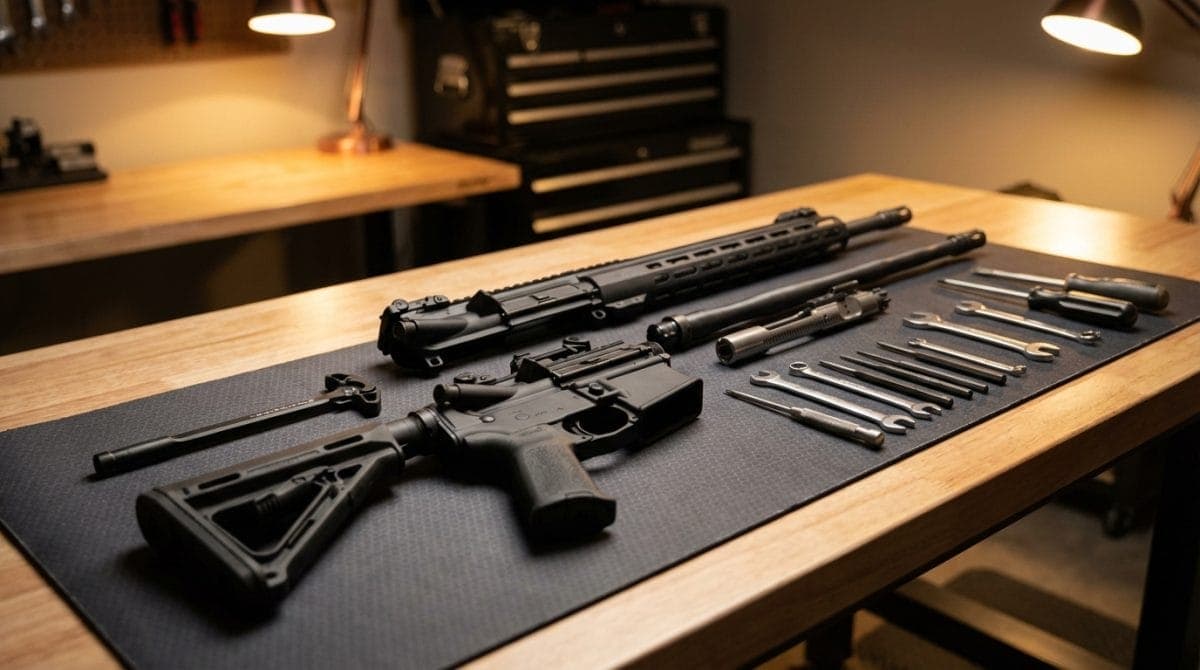
AR-15 Torque Specs: Every Bolt and Nut
By AR-15 Outfitters · April 10, 2026
AR15 Outfitters may earn a commission on purchases made through links in this article. This does not affect pricing or our recommendations.
Building an AR-15 requires precision at every step, and proper torque specifications for every bolt and nut can make the difference between a reliable rifle and one that fails when you need it most. Whether you’re assembling your first build or fine-tuning a precision rifle, understanding these torque values ensures optimal performance and safety.
Understanding AR-15 Torque Requirements
Torque specifications vary significantly across AR-15 components, from the critical barrel nut requiring 30-80 ft-lbs to tiny handguard screws needing just 15-20 in-lbs. These variations exist because each fastener serves a different purpose: some maintain gas seal integrity, others prevent component movement, and some simply hold accessories in place.
The most important torque values typically involve the barrel assembly, receiver components, and gas system. Getting these wrong can result in accuracy issues, gas leaks, or catastrophic failures.
Critical Component Torque Specifications
Barrel Nut Torque: The Foundation
The barrel nut torque spec represents the most critical measurement in your build. Most manufacturers recommend 30-80 ft-lbs, though specific values depend on the barrel nut design:
- Standard mil-spec barrel nuts: 30-80 ft-lbs (align to next gas tube hole)
- Enhanced barrel nuts (no timing required): 40-60 ft-lbs typical
- Proprietary systems: Follow manufacturer specifications exactly
When torquing barrel nuts, proper alignment matters more than hitting maximum torque. If you reach 30 ft-lbs and the gas tube won’t align, continue tightening up to 80 ft-lbs. If alignment still fails, use shims rather than exceeding specifications.
Receiver and Lower Components
The castle nut securing your buffer tube typically requires 40 ft-lbs, though some manufacturers specify up to 45 ft-lbs. This torque value prevents the buffer tube from loosening during recoil while avoiding receiver thread damage.
Other critical lower receiver torque specifications include:
- Pistol grip screw: 25-35 in-lbs
- Trigger guard roll pin: Hand tight only
- Buffer retainer: 8-10 ft-lbs
- Takedown pins: No torque required
Comprehensive Torque Specification Table
| Component | Torque Value | Notes |
|---|---|---|
| Barrel Nut | 30-80 ft-lbs | Align gas tube at lowest acceptable torque |
| Castle Nut | 40 ft-lbs | Stake after torquing |
| Flash Hider/Muzzle Device | 15-20 ft-lbs | Use crush washer or shim for timing |
| Gas Block Screws | 25-35 in-lbs | Apply thread locker |
| Handguard Screws | 15-25 in-lbs | Varies by manufacturer |
| M-LOK Accessories | 15 in-lbs | Maximum to prevent insert damage |
| Scope Ring Screws | 15-25 in-lbs | Check optic manufacturer specs |
| Upper Receiver to Lower | Hand tight | No torque specification |
Tools and Best Practices
Achieving proper torque requires quality tools. An inch-pound torque wrench handles most small fasteners, while a foot-pound wrench manages barrel nuts and castle nuts. For barrel nut installation, an armorer’s wrench provides the necessary leverage and engagement points.
Key practices for consistent results:
- Clean all threads before assembly
- Apply specified lubricants (typically light oil for barrel threads)
- Torque in stages, reaching final value gradually
- Verify torque after initial firing
Common Torque-Related Issues
Over-torquing remains the most frequent mistake, particularly with aluminum receivers and handguard mounting points. Stripping threads in an upper receiver essentially ruins the component, while under-torqued barrel nuts cause accuracy degradation and potential safety hazards.
M-LOK accessories present unique challenges. Exceeding 15 in-lbs can crack polymer handguards or deform aluminum T-nuts. Many builders learn this expensive lesson when their first accessory installation goes wrong.
Recommended Parts
Building with quality components ensures torque specifications achieve their intended purpose. The AR15 Outfitters builder helps you select compatible parts while comparing prices across retailers. Their configurator validates component compatibility, preventing common mistakes like mismatched thread patterns or incorrect barrel nut styles.
When selecting parts through the builder, pay attention to included hardware and manufacturer torque specifications. Premium manufacturers typically provide detailed torque values, while budget options might require referencing standard specifications.
Remember: proper torque represents just one element of a successful build. Component quality, careful assembly, and appropriate maintenance complete the reliability equation.
Disclaimer: AR15 Outfitters does not sell firearms. This site is an information and affiliate resource only. All purchases are completed through licensed retailers. Always comply with all federal, state, and local laws when building or purchasing firearms and firearm components.
More Articles
AR-15 Failure to Eject: Causes and Fixes. Find the best parts and prices on the AR15 Outfitters builder.
AR-15 Failure to Feed: Causes and FixesAR-15 Failure to Feed: Causes and Fixes. Find the best parts and prices on the AR15 Outfitters builder.
AR-15 Double Feed: How to Clear and PreventAR-15 Double Feed: How to Clear and Prevent. Find the best parts and prices on the AR15 Outfitters builder.