
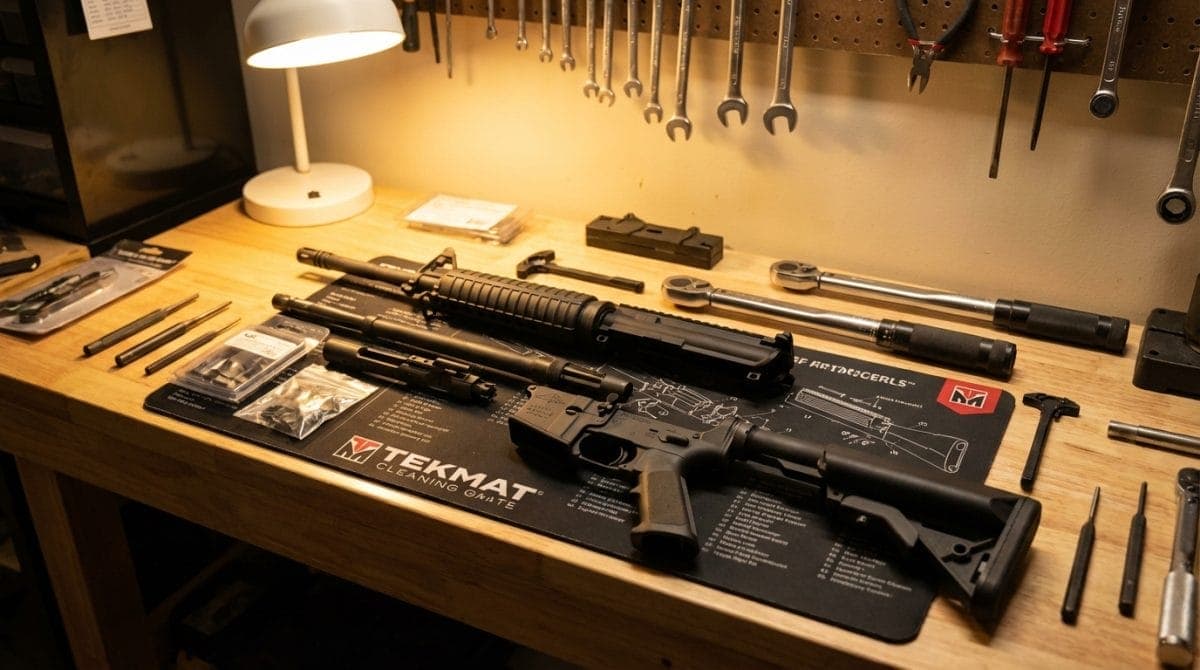
10 Common AR-15 Build Mistakes and How to Avoid Them
By AR-15 Outfitters · April 9, 2026
AR15 Outfitters may earn a commission on purchases made through links in this article. This does not affect pricing or our recommendations.
Building your first AR-15 can be an exciting but challenging experience. Even experienced builders occasionally make mistakes that can affect reliability, accuracy, or safety. Understanding these common AR-15 build mistakes and knowing how to avoid them will save you time, money, and frustration. This guide covers the ten most frequent errors builders encounter and provides specific solutions to ensure your build goes smoothly.
1. Using Incorrect Torque Specifications
One of the most common errors in AR-15 assembly is applying improper torque to critical components. This seemingly minor mistake can lead to catastrophic failures or chronic reliability issues.
What Goes Wrong
Under-torquing components can cause them to work loose during firing, potentially resulting in parts failure or injury. Over-torquing can strip threads, crack receivers, or damage components beyond repair. For example, over-torquing a scope mount to 80 inch-pounds when the specification calls for 65 inch-pounds can crack the receiver’s Picatinny rail.
The Correct Approach
Invest in a quality inch-pound torque wrench and follow these specifications:
- Barrel nut: 30-80 ft-lbs (typically 35-50 ft-lbs for standard nuts)
- Castle nut: 38-42 ft-lbs
- Scope rings: 15-25 inch-lbs (varies by manufacturer)
- Handguard mounting screws: 35-40 inch-lbs
- Gas block screws: 25-30 inch-lbs
- Pistol grip screw: 35-40 inch-lbs
Always consult your specific manufacturer’s recommendations, as some proprietary designs may require different values.
2. Improper Gas Block Alignment
Misaligning the gas block is a build error that directly impacts your rifle’s ability to cycle properly. This mistake often manifests as short-stroking, failure to eject, or failure to feed.
What Goes Wrong
When the gas port in the block doesn’t align with the barrel’s gas port, insufficient gas pressure reaches the bolt carrier group. Even a misalignment of 0.020 inches can reduce gas flow by 50% or more, causing cycling issues. In extreme cases, complete misalignment results in a single-shot rifle.
The Correct Approach
Follow these steps for proper alignment:
- Ensure the barrel is properly indexed with the upper receiver
- Slide the gas block onto the barrel journal
- Use a 0.025-inch roll pin punch through the gas block port to verify alignment with the barrel port
- For adjustable blocks, start with the adjustment screw fully open
- Apply aerobic thread locker (blue Loctite) to set screws
- Tighten screws evenly to 25-30 inch-lbs
Consider using a borescope or alignment jig for precision builds to verify perfect alignment.
3. Failing to Stake the Castle Nut
The castle nut secures your buffer tube to the lower receiver, and failing to stake it properly is one of the most overlooked mistakes in AR-15 assembly.
What Goes Wrong
An unstaked castle nut can loosen during firing, causing the stock to wobble or, in worst cases, completely detach. This creates both a safety hazard and reliability issue. Even with proper torque, the rotational forces during recoil can gradually loosen an unstaked nut.
The Correct Approach
After torquing the castle nut to 38-42 ft-lbs:
- Select one or two notches that align with the end plate staking points
- Use a quality automatic center punch or staking tool
- Strike firmly to deform metal from the end plate into the castle nut notch
- The stake should create visible deformation without cracking the end plate
- Verify the nut cannot be turned by hand after staking
Some builders prefer using anti-rotation end plates, but proper staking remains the military specification standard.
4. Not Staking the Gas Key
The bolt carrier gas key is another critical component that requires proper staking. This oversight can lead to immediate or gradual failure of your rifle’s gas system.
What Goes Wrong
Unstaked gas key screws can loosen from the repeated impacts of firing, causing gas leakage. This results in short-stroking, failure to extract, and eventually complete loss of semi-automatic function. In extreme cases, loose screws can fall into the action and cause a stoppage.
The Correct Approach
Properly staking a gas key requires:
- Torque gas key screws to 35-40 inch-lbs using Rocksett or similar high-temperature thread locker
- Support the carrier in a vise with proper blocks
- Use a MOACKS (Mother Of All Carrier Key Stakers) or similar tool
- Strike the staking tool to deform the screw metal into the gas key
- Both screws should show clear deformation preventing rotation
- Verify screws cannot be removed without drilling
Quality manufacturers typically provide properly staked carriers, but always verify this critical detail.
5. Over-Torquing the Barrel Nut
Barrel nut installation requires a delicate balance: enough torque for security but not so much that you damage components. This is a particularly common mistake among first-time builders.
What Goes Wrong
Over-torquing can stretch or crack the upper receiver threads, compress the barrel extension excessively, or distort the bore. These issues may not be immediately apparent but can cause accuracy problems, premature wear, or catastrophic failure. Typically, damage occurs above 80 ft-lbs, though some receivers may fail at lower values.
The Correct Approach
Follow this procedure for standard barrel nuts:
- Apply aeroshell 33MS or anti-seize to receiver threads
- Hand-tighten the barrel nut initially
- Torque to 30 ft-lbs
- Loosen completely
- Retorque to 30 ft-lbs
- Loosen completely
- Torque to 35-50 ft-lbs while aligning gas tube hole
- Maximum torque should not exceed 80 ft-lbs
Enhanced barrel nuts may have different procedures; always consult manufacturer specifications.
6. Mismatched Gas System Length and Barrel
Selecting incompatible gas system components is a fundamental compatibility error that affects reliability and parts longevity.
What Goes Wrong
Each gas system length corresponds to specific port distances from the chamber. Using a carbine-length gas tube on a mid-length barrel, for example, places the gas block 2 inches short of the gas port. The rifle won’t cycle at all. Conversely, using too long a gas system creates timing issues and insufficient pressure.
The Correct Approach
Understand these standard measurements:
| Gas System | Port Distance | Typical Barrel Length | Dwell Time (16″ barrel) |
|---|---|---|---|
| Pistol | 4 inches | 7-11.5 inches | N/A |
| Carbine | 7 inches | 10-16 inches | 9 inches |
| Mid-length | 9 inches | 14-18 inches | 7 inches |
| Rifle | 12 inches | 18+ inches | 4 inches |
Always verify your barrel’s gas port location matches your gas block and tube length before assembly.
7. Wrong Buffer Weight Selection
Buffer weight significantly impacts cycling reliability, recoil characteristics, and overall function. Choosing the wrong weight is a frequent build mistake that can be frustrating to diagnose.
What Goes Wrong
Too light a buffer causes violent cycling, bolt bounce, and potential out-of-battery detonations. Excessive bolt velocity also accelerates wear on components. Too heavy a buffer results in short-stroking, failure to lock back on empty magazines, and inconsistent ejection patterns. These issues often worsen with different ammunition types.
The Correct Approach
Start with these general guidelines:
- Carbine buffer (3.0 oz): Standard for 16-inch carbine gas systems
- H buffer (3.8 oz): Better for 16-inch barrels, reduces bolt bounce
- H2 buffer (4.6 oz): Ideal for overgassed systems or suppressed use
- H3 buffer (5.4 oz): Typically for short barrels or heavily suppressed guns
- Rifle buffer (5.0 oz): Standard for rifle-length systems
Fine-tune by observing ejection patterns: 3-4 o’clock indicates proper function, while 1-2 o’clock suggests overgassing and 5-6 o’clock indicates undergassing.
8. Forgetting to Check Headspace
Headspace verification is perhaps the most important safety check in AR-15 assembly, yet many builders skip this critical step.
What Goes Wrong
Excessive headspace can cause case head separation, releasing hot gases into the action and potentially injuring the shooter. Insufficient headspace prevents chambering or causes difficult extraction. Both conditions can result in catastrophic failure. While modern quality components rarely have headspace issues, verification remains important.
The Correct Approach
Use proper headspace gauges:
- Clean the chamber and bolt thoroughly
- Insert GO gauge (1.4636 inches for 5.56): Bolt should close completely
- Insert NO-GO gauge (1.4666 inches): Bolt should not close
- Field gauge (1.4696 inches) represents maximum acceptable headspace
- If bolt closes on NO-GO, stop and evaluate components
- Document measurements for future reference
Quality barrels and bolts typically headspace correctly, but mixed manufacturers increase the importance of checking.
9. Not Verifying Parts Compatibility Before Purchase
Ordering incompatible parts wastes time and money, yet this remains one of the most common AR-15 build mistakes. The AR platform’s modularity creates countless potential incompatibilities.
What Goes Wrong
Common incompatibility issues include:
- Commercial vs mil-spec buffer tubes and stocks
- Rail height mismatches between uppers and handguards
- Wrong thread pitch for muzzle devices (1/2×28 vs 5/8×24)
- Incompatible trigger and safety selector combinations
- Proprietary parts that don’t fit standard patterns
These mistakes often aren’t discovered until assembly, requiring returns and delays.
The Correct Approach
Before ordering, verify:
- All components share the same platform specifications
- Thread pitches match for all threaded connections
- Gas system lengths align with barrel specifications
- Buffer system components are compatible
- Handguard mounting system matches your upper receiver
Using a compatibility checker like the AR15 Outfitters Builder helps prevent these costly errors by validating part compatibility before purchase.
10. Skipping Function Checks
Completing assembly without thorough function checks is a dangerous oversight that can lead to malfunctions or safety hazards during first use.
What Goes Wrong
Skipping function checks means potential issues go undetected until live fire. Problems like improper trigger reset, safety selector malfunctions, or magazine catch issues can cause dangerous situations at the range. Additionally, some problems are much harder to diagnose after assembly is complete.
The Correct Approach
Perform these checks with the rifle unloaded and pointed in a safe direction:
- Trigger Function: Verify proper reset and no hammer follow
- Safety Selector: Ensure positive engagement in both positions
- Magazine Catch: Test with multiple magazines for positive retention
- Bolt Catch: Verify holds bolt open and releases properly
- Charging Handle: Check smooth operation without binding
- Buffer System: Manually cycle to verify smooth operation
- Gas System: Blow through gas tube to verify clear path
Document any issues found and address them before proceeding to live fire testing.
Recommended Parts
Selecting quality components from reputable manufacturers helps avoid many common build mistakes. When building your AR15, prioritize:
- Mil-spec or better receivers from established manufacturers
- Properly headspaced barrel and bolt combinations
- Quality lower parts kits with proper specifications
- Buffer systems matched to your gas system length
- Handguards with secure, proven mounting systems
The AR15 Outfitters Builder provides an excellent platform for selecting compatible components and comparing prices across retailers. This tool helps prevent compatibility issues by validating your selections before purchase, saving both time and money on your build project.
Remember, building an AR-15 successfully requires patience, proper tools, and attention to detail. By understanding these common mistakes and following the correct procedures, you’ll create a reliable, safe, and accurate rifle that serves you well for years to come.
Disclaimer: AR15 Outfitters does not sell firearms. This site is an information and affiliate resource only. All purchases are completed through licensed retailers. Always comply with all federal, state, and local laws when building or purchasing firearms and firearm components.
More Articles
AR-15 Failure to Eject: Causes and Fixes. Find the best parts and prices on the AR15 Outfitters builder.
AR-15 Failure to Feed: Causes and FixesAR-15 Failure to Feed: Causes and Fixes. Find the best parts and prices on the AR15 Outfitters builder.
AR-15 Double Feed: How to Clear and PreventAR-15 Double Feed: How to Clear and Prevent. Find the best parts and prices on the AR15 Outfitters builder.