
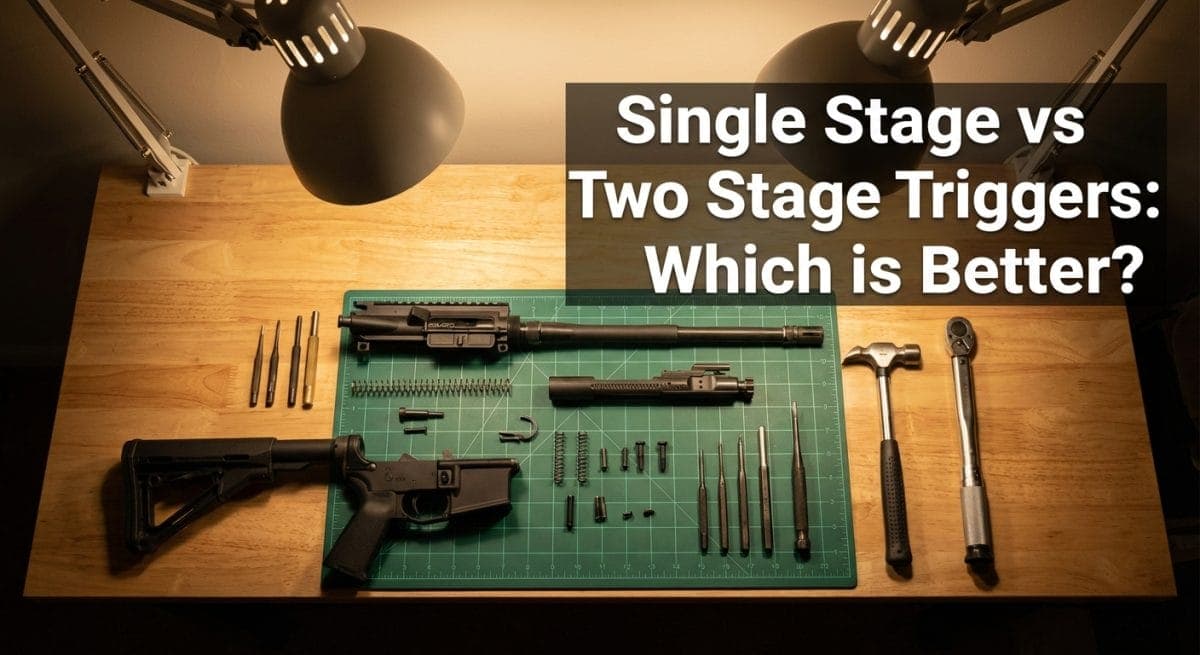
Single Stage vs Two Stage Triggers: Which is Better?
By AR-15 Outfitters · April 9, 2026
AR15 Outfitters may earn a commission on purchases made through links in this article. This does not affect pricing or our recommendations.
The trigger on your AR-15 directly impacts accuracy, control, and overall shooting performance. When building or upgrading your rifle, choosing between a single stage trigger and a two stage trigger represents one of the most important decisions you’ll make. Both designs excel in different applications, and understanding their mechanical differences, performance characteristics, and ideal use cases helps you select the right trigger for your specific needs.
This guide breaks down the key differences between single stage and two stage triggers, examines their pros and cons with real-world examples, and provides specific recommendations based on your intended use. Whether you’re building a precision long range rifle or a home defense carbine, we’ll help you make an informed decision backed by measurable data and practical experience.
Understanding AR-15 Trigger Mechanics
Before diving into the single stage vs two stage debate, let’s establish baseline trigger terminology and mechanics. Your AR trigger controls the release of the hammer, which strikes the firing pin to discharge the round. The quality of this mechanical action directly affects your ability to place accurate shots.
Key Trigger Terminology
Trigger Pull Weight: Measured in pounds (lb), this refers to the force required to release the hammer. Competition triggers typically range from 2.5-4.5 lb, while duty triggers often measure 4.5-6.5 lb for added safety margin.
Creep: Any perceptible movement in the trigger after initial takeup but before the break. Quality triggers minimize or eliminate creep for predictable shot release.
Break: The point where the sear releases the hammer. A crisp break feels like glass breaking, while a mushy break lacks definition.
Overtravel: Trigger movement after the break. Adjustable triggers often allow you to minimize overtravel for faster follow-up shots.
Reset: The distance the trigger must travel forward to re-engage the sear for the next shot. Shorter resets generally enable faster controlled fire.
Single Stage Trigger Characteristics
A single stage trigger operates with one consistent pull weight from initial contact through the break. When you apply pressure to a single-stage trigger, you immediately begin working against the full trigger pull weight until the hammer releases.
How Single Stage Triggers Work
In a single stage design, the trigger directly engages the hammer’s sear surface. As you pull the trigger, it rotates on its pin, moving the sear out of engagement with the hammer. The entire process happens in one smooth motion with consistent resistance throughout.
For example, a Geissele SSA-E single stage trigger with a 3.5 lb pull weight requires approximately 3.5 lb of force from the moment your finger contacts the trigger shoe until the hammer falls. There’s typically minimal takeup (often less than 0.020 inches), followed immediately by the break.
Single Stage Trigger Advantages
Simplicity and Speed: With no first stage to navigate, single stage triggers enable faster shot execution. This proves particularly valuable in competitive shooting where fractions of seconds matter. In 3-gun competitions, top shooters often prefer light single stage triggers in the 2.5-3.5 lb range for rapid target transitions.
Consistent Pull: The uniform resistance throughout the trigger pull helps shooters develop consistent trigger control. You always know exactly how much pressure you need to apply.
Reduced Lock Time: Single stage triggers typically exhibit shorter lock times (the delay between trigger break and primer strike). High-end single-stage triggers measure lock times around 2.6-3.2 milliseconds, compared to 3.5-4.0 milliseconds for many two-stage designs.
Training Efficiency: The straightforward operation makes single stage triggers easier for new shooters to master. There’s only one weight to memorize and one motion to practice.
Single Stage Trigger Disadvantages
Less Margin for Error: Without a first stage wall to stage against, accidental discharges become more likely under stress. A startled shooter might inadvertently apply the full 3.5 lb needed to fire when they only intended to prep the trigger.
Precision Challenges: For long range precision work, the lack of a staging point can make it harder to time your shot with respiratory pause and natural point of aim. Shooters must maintain consistent finger pressure without a reference point.
Limited Feedback: Single stage triggers provide less tactile information about where you are in the trigger pull. This can lead to jerked shots when shooters are surprised by the break.
Two Stage Trigger Characteristics
A two stage trigger divides the trigger pull into two distinct phases. The first stage typically requires 1.5-2.5 lb of pressure and provides takeup with minimal resistance. The second stage adds another 1-2 lb before the break, creating a total pull weight typically between 3.5-4.5 lb.
How Two-Stage Triggers Work
Two stage trigger mechanisms incorporate an additional engagement surface or cam that must be overcome before reaching the primary sear engagement. During the first stage, you’re moving the trigger through preliminary mechanical movements. When you hit the “wall” between stages, you’ve reached the point where additional pressure will release the hammer.
Consider the Geissele SSA two-stage trigger: the first stage requires approximately 2.5 lb to reach the wall, then an additional 1.5 lb to break the shot, totaling 4 lb. The first stage typically encompasses 0.120-0.150 inches of travel, while the second stage adds only 0.020-0.030 inches.
Two Stage Trigger Advantages
Enhanced Control: The distinct wall between stages provides a clear reference point for staged shooting. Long range precision shooters can take up the first stage while acquiring their sight picture, then break the shot with minimal additional movement.
Safety Buffer: The two stage design inherently provides more safety margin. Under stress, a shooter can take up the first stage without risk of discharge, maintaining better muzzle discipline.
Improved Accuracy Potential: In precision rifle competitions, two stage triggers dominate. The ability to stage the trigger helps shooters time their shots with natural respiratory pause and minimizes sight disturbance during the final trigger press.
Versatility: Two stage triggers excel across multiple disciplines. They work well for precision shooting while remaining fast enough for practical shooting with proper technique.
Two Stage Trigger Disadvantages
Slower for Rapid Fire: The additional first stage travel can slow down rapid fire sequences. In timed competition stages, those extra milliseconds per shot compound quickly.
Training Curve: New shooters must learn to consistently find and stage against the wall. Improper technique can lead to pushing through both stages unintentionally.
Mechanical Complexity: Two stage triggers contain more parts and contact surfaces, potentially increasing maintenance requirements and failure points. However, quality two stage triggers from reputable manufacturers prove extremely reliable in practice.
Single Stage vs Two Stage Trigger Comparison Table
| Feature | Single Stage Trigger | Two Stage Trigger |
|---|---|---|
| Typical Pull Weight | 2.5-6.5 lb total | 3.5-4.5 lb total (split between stages) |
| Travel Distance | 0.050-0.100″ typical | 0.150-0.200″ typical (both stages) |
| Best For | Competition, home defense, rapid fire | Precision shooting, hunting, general purpose |
| Learning Curve | Minimal | Moderate |
| Safety Margin | Lower | Higher |
| Speed | Faster | Slower |
| Precision Potential | Good | Excellent |
| Price Range | $89-350 | $89-395 |
Practical Use Case Recommendations
Your intended application should drive your trigger selection. Here’s what works best for specific uses based on extensive field testing and competition results:
Home Defense and Duty Use
For defensive rifles, prioritize reliability and safety margin over ultimate performance. A quality two stage trigger in the 4.5-5.5 lb range provides good control while minimizing negligent discharge risk under stress. The distinct wall helps maintain positive trigger finger discipline during high-stress scenarios.
Recommended specs: 4.5-5.5 lb total pull weight, minimal creep, positive reset. Examples include the Geissele SSA (4.5 lb) or ALG Defense ACT (6 lb).
3-Gun and Competition Shooting
Speed matters in competition. A light single stage trigger in the 2.5-3.5 lb range enables rapid strings of fire and fast split times. Top 3-gun competitors typically run single stage triggers for their predictability and minimal lock time.
Recommended specs: 2.5-3.5 lb single stage, minimal overtravel, short reset. The Geissele S3G (3.5 lb) and Timney Competition (3 lb) excel here.
Precision and Long Range Shooting
For precision work beyond 300 yards, a two stage trigger provides superior control. The ability to stage against the wall while perfecting sight alignment proves invaluable for consistent small groups. Match shooters almost universally prefer two stage designs.
Recommended specs: 3.5-4.5 lb total weight with distinct first/second stages. The Geissele SSA-E (3.5 lb) and LaRue MBT-2S (4.5 lb) represent excellent choices.
Hunting Applications
Hunting demands a balance of precision and safety. A two stage trigger around 4-4.5 lb total weight provides good control for precise shot placement while maintaining adequate weight for cold-weather use with gloves.
Recommended specs: 4-4.5 lb two stage with distinct wall. Consider triggers with minimal exposed components to resist fouling.
General Purpose and Training
For rifles serving multiple roles, a quality two stage trigger around 4.5 lb offers maximum versatility. This weight proves light enough for good accuracy while heavy enough for safe handling by multiple users of varying experience levels.
Making Your Personal Preference Decision
Ultimately, trigger selection comes down to personal preference informed by your specific needs. Consider these factors:
- Experience Level: Newer shooters often benefit from the safety margin of a two stage trigger
- Primary Use: Match your trigger to your most common shooting discipline
- Budget: Quality triggers range from $89-395; set realistic expectations based on price
- Training Time: Single stage triggers require less practice to master
Many experienced shooters maintain multiple rifles with different trigger types optimized for specific uses. This approach maximizes performance across disciplines without compromise.
Installation and Tuning Considerations
Proper installation ensures optimal trigger performance and safety. Most drop-in triggers install in 15-30 minutes using basic tools. However, consider these factors:
Anti-Walk Pins: Some aftermarket triggers benefit from anti-rotation pins, especially in high-volume shooting applications. These prevent pin migration that could cause malfunctions.
Spring Tuning: Many triggers include multiple spring weights to fine-tune pull weight. Start with manufacturer recommendations and adjust based on your preferences and safety requirements.
Function Testing: After installation, perform thorough function tests including hammer follow checks, reset verification, and safety selector operation in all positions.
Recommended Parts for Your Build
Ready to upgrade your trigger? The AR15 Outfitters builder tool helps you compare triggers across manufacturers while checking compatibility with your other components. Visit https://ar15outfitters.com/builder to explore options and current pricing.
Popular single stage options to consider:
- Geissele SSP (3.5 lb) for competition use
- CMC Single Stage (3.5 lb) drop-in design
- Timney Impact (3 lb) for budget-conscious builders
Recommended two stage triggers:
- Geissele SSA-E (3.5 lb) for precision work
- LaRue MBT-2S (4.5 lb) for exceptional value
- Triggertech Adaptable (2.5-5 lb) for maximum adjustability
The builder tool lets you filter by pull weight, price, and features to find the perfect trigger for your specific AR build and budget.
Final Thoughts on AR-15 Triggers
The single stage vs two stage trigger debate ultimately resolves to matching the trigger design to your intended use and shooting style. Single stage triggers excel where speed matters most, offering simple operation and fast lock times. Two stage triggers provide superior control for precision work and enhanced safety margins for defensive use.
Rather than seeking one “best” trigger, focus on selecting the right trigger for each rifle’s purpose. A 3-gun competition rifle benefits from different trigger characteristics than a precision DMR or home defense carbine. By understanding the mechanical differences and practical applications of each design, you can make informed decisions that enhance your shooting performance and safety.
Remember that even the best trigger can’t overcome poor fundamentals. Invest in training alongside equipment upgrades, and practice regularly with your chosen trigger to maximize its potential. Whether you choose a crisp single stage or a controlled two stage design, consistent practice builds the muscle memory needed for accurate, rapid shooting when it counts.
Disclaimer: AR15 Outfitters does not sell firearms. This site is an information and affiliate resource only. All purchases are completed through licensed retailers. Always comply with all federal, state, and local laws when building or purchasing firearms and firearm components.
More Articles
AR-15 Failure to Eject: Causes and Fixes. Find the best parts and prices on the AR15 Outfitters builder.
AR-15 Failure to Feed: Causes and FixesAR-15 Failure to Feed: Causes and Fixes. Find the best parts and prices on the AR15 Outfitters builder.
AR-15 Double Feed: How to Clear and PreventAR-15 Double Feed: How to Clear and Prevent. Find the best parts and prices on the AR15 Outfitters builder.