
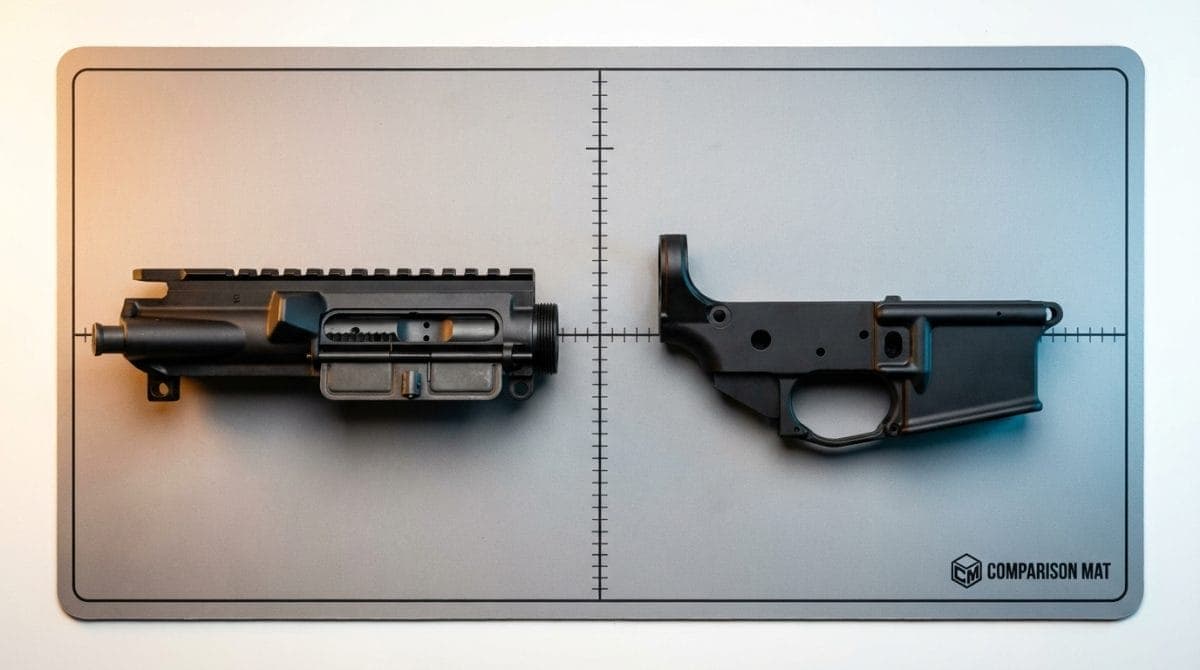
Toolcraft vs Microbest BCG: Budget BCG Showdown
By AR-15 Outfitters · April 10, 2026
AR15 Outfitters may earn a commission on purchases made through links in this article. This does not affect pricing or our recommendations.
When building your first AR-15 or upgrading an existing rifle, the bolt carrier group represents one of the most important components for reliable function. Two manufacturers dominate the budget BCG market: Toolcraft and Microbest. Both produce mil-spec bolt carrier groups for numerous OEM customers, including major brands like BCM, PSA, and SOLGW. Understanding the differences between these manufacturers helps you make an informed decision for your build.
Understanding BCG Manufacturing Standards
Before diving into the Toolcraft vs Microbest comparison, it’s important to understand what makes a quality bolt carrier group. The military specification (mil-spec) for an M16/AR-15 BCG includes several key requirements:
- Carpenter 158 (C158) steel for the bolt
- 8620 steel for the carrier
- High pressure testing (HPT) and magnetic particle inspection (MPI)
- Proper heat treatment to achieve 58-62 HRC on the bolt
- Chrome lining in the carrier interior (0.001-0.003″ thickness)
- Properly staked gas key screws torqued to 35-40 inch-pounds
Both Toolcraft and Microbest meet these specifications, but their approaches to manufacturing and quality control differ in meaningful ways.
Toolcraft BCGs: The Industry Workhorse
Toolcraft has built a reputation as one of the largest OEM suppliers of bolt carrier groups in the industry. Based in South Carolina, they produce BCGs for companies ranging from budget-oriented PSA to premium manufacturers. Their production capacity exceeds 1,000 units per day, making them a go-to choice for high-volume contracts.
Toolcraft Manufacturing Process
Toolcraft uses modern CNC equipment and automated processes to maintain consistency across large production runs. Their standard phosphate BCG follows this process:
- Machining from 8620 bar stock for the carrier and C158 for the bolt
- Heat treatment to achieve proper hardness specifications
- Chrome lining the carrier interior to 0.002″ typical thickness
- Phosphate coating application (manganese phosphate, 0.0002-0.0005″ thickness)
- 100% HPT and MPI testing on bolts
- Assembly with properly torqued and staked gas key screws
Toolcraft Coating Options
While phosphate remains their most common coating, Toolcraft offers several options:
- Phosphate: Traditional mil-spec coating, excellent corrosion resistance when properly oiled
- Nitride: QPQ process providing 68-72 HRC surface hardness, reduced friction
- Nickel Boron (NiB): 0.0002-0.0004″ thickness, 72 HRC surface hardness, self-lubricating properties
- DLC (Diamond-Like Carbon): Premium coating with 0.2 coefficient of friction
Toolcraft Pros and Cons
Pros:
- Consistent quality across large production runs
- Widely available through multiple retailers and OEMs
- Proven track record with millions of units in service
- Competitive pricing (typically $89-129 for phosphate models)
- Multiple coating options available
Cons:
- Some users report occasional out-of-spec dimensions (typically 1-2% of production)
- Gas key staking can vary in quality between batches
- Limited direct customer support (sold through distributors)
Microbest BCGs: The Precision Alternative
Microbest operates from their facility in Missouri, focusing on smaller batch production with enhanced quality control. While their production volume is lower than Toolcraft, they’ve earned a reputation for exceptional consistency and attention to detail.
Microbest Manufacturing Approach
Microbest emphasizes tighter tolerances and additional inspection steps:
- CNC machining with tolerances held to ±0.0005″ on critical dimensions
- Enhanced heat treatment process with cryogenic stress relief
- Chrome lining to 0.0025″ typical thickness (slightly thicker than standard)
- Multi-stage inspection process including dimensional verification
- Hand inspection of each BCG before packaging
- Documented batch testing with certificates available
Quality Control Differences
Where Microbest distinguishes itself is in their quality control process. They perform additional testing beyond standard HPT and MPI:
- Headspace verification on assembled uppers (when purchased as complete units)
- Extractor spring tension testing to ensure 4.5-5.5 pounds of force
- Gas key leak testing using specialized fixtures
- Bolt lug contact verification ensuring minimum 75% bearing surface
Microbest Pros and Cons
Pros:
- Exceptionally consistent dimensions and finish quality
- Enhanced chrome lining thickness for longer service life
- Superior gas key staking (consistently proper depth and coverage)
- Lower reported failure rates (typically under 0.5%)
- Better extractor geometry and spring tension out of the box
Cons:
- Higher price point (typically $109-149 for phosphate models)
- Limited availability compared to Toolcraft
- Fewer coating options (primarily phosphate and nitride)
- Longer lead times during high demand periods
Head-to-Head Comparison
| Feature | Toolcraft | Microbest |
|---|---|---|
| Bolt Material | Carpenter 158 | Carpenter 158 |
| Carrier Material | 8620 Steel | 8620 Steel |
| Chrome Lining Thickness | 0.001-0.002″ | 0.002-0.003″ |
| HPT/MPI Testing | 100% on bolts | 100% on bolts |
| Gas Key Staking | USGI pattern, varies | OCKS pattern, consistent |
| Typical Price (Phosphate) | $89-129 | $109-149 |
| Coating Options | Phosphate, Nitride, NiB, DLC | Phosphate, Nitride |
| Warranty | Limited lifetime | Limited lifetime |
| Production Volume | 1000+ units/day | 200-300 units/day |
| Reported Failure Rate | 1-2% | <0.5% |
Real-World Performance Testing
Independent testing by several AR-15 armory facilities and high-volume training centers provides insight into long-term durability. Based on documented round counts from multiple sources:
Toolcraft phosphate BCGs typically show:
- First signs of bolt lug wear at 12,000-15,000 rounds
- Extractor replacement needed around 10,000-12,000 rounds
- Gas key loosening issues in 2-3% of samples before 5,000 rounds
- Cam pin wear becoming measurable at 8,000-10,000 rounds
Microbest phosphate BCGs demonstrate:
- Bolt lug wear appearing at 15,000-18,000 rounds
- Extractor lasting 12,000-15,000 rounds typically
- Gas key issues in less than 0.5% of samples
- Cam pin wear measurable at 10,000-12,000 rounds
The enhanced chrome lining thickness in Microbest carriers contributes to their slightly better wear characteristics, particularly in high round count applications.
Practical Recommendations by Use Case
Budget AR15 Builds
For builds where cost is the primary concern, Toolcraft phosphate BCGs offer excellent value. At $89-99 from retailers like PSA, they provide mil-spec performance that will satisfy most recreational shooters. The slight variations in quality are unlikely to affect function for typical range use.
Duty or Defense Rifles
For AR-15s intended for home defense or professional use, the enhanced quality control of Microbest justifies the additional cost. The reduced failure rate and superior gas key staking provide extra peace of mind when reliability matters most.
High-Volume Training
Training facilities and competitive shooters putting thousands of rounds downrange annually benefit from either manufacturer’s nitride BCG options. The increased surface hardness (68-72 HRC) of nitride coating extends component life by approximately 20-30% compared to phosphate.
Precision Builds
For precision-oriented builds, Microbest’s tighter tolerances and consistent dimensions make them the better choice. The enhanced extractor geometry and spring tension also contribute to more consistent extraction, important for accuracy testing.
Upgrade Considerations
Regardless of which manufacturer you choose, several upgrades can enhance BCG performance:
- Sprinco extractor springs: Provide 15-20% more tension than standard springs
- Enhanced extractors: BCM or LMT extractors offer improved geometry
- JP enhanced bolt: Features radiused lugs and enhanced metallurgy
- Upgraded cam pins: KNS or POF roller cam pins reduce wear
The Verdict: Which Should You Choose?
Both Toolcraft and Microbest produce quality bolt carrier groups that exceed mil-spec requirements. Your choice should depend on your specific needs and budget:
Choose Toolcraft when:
- Building on a tight budget
- You want multiple coating options
- Immediate availability is important
- Building multiple rifles where small cost savings add up
Choose Microbest when:
- Reliability is your top priority
- Building a duty or defensive rifle
- You appreciate enhanced quality control
- The rifle will see high round counts
In most cases, either manufacturer will serve you well. The differences become more apparent in high-stress applications or after thousands of rounds. For the average shooter putting 1,000-2,000 rounds per year through their AR, both options provide reliable service life exceeding a decade.
Recommended Parts
Ready to build your AR-15 with a quality BCG? Visit the AR15 Outfitters Builder to configure your complete upper assembly. The builder tool allows you to compare prices across multiple retailers for both Toolcraft and Microbest BCGs, ensuring you get the best deal on your chosen bolt carrier group. You can also explore compatible uppers, barrels, and other components to complete your build with confidence.
Disclaimer: AR15 Outfitters does not sell firearms. This site is an information and affiliate resource only. All purchases are completed through licensed retailers. Always comply with all federal, state, and local laws when building or purchasing firearms and firearm components.
More Articles
AR-15 Failure to Eject: Causes and Fixes. Find the best parts and prices on the AR15 Outfitters builder.
AR-15 Failure to Feed: Causes and FixesAR-15 Failure to Feed: Causes and Fixes. Find the best parts and prices on the AR15 Outfitters builder.
AR-15 Double Feed: How to Clear and PreventAR-15 Double Feed: How to Clear and Prevent. Find the best parts and prices on the AR15 Outfitters builder.